

 Explore to inspire, a PONANT podcast
 PONANT's cruises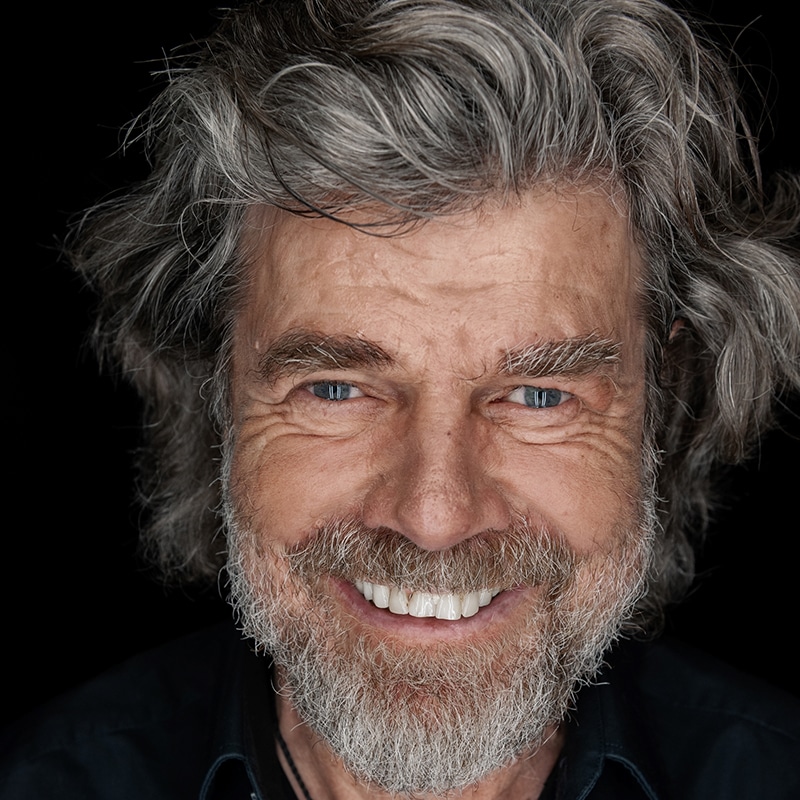
Meet a mountaineering legend
Reinhold Messner changed the history of mountaineering by becoming the first person to climb all fourteen of the world’s peaks over 8,000 metres without supplemental oxygen. This explorer of verticality then crossed deserts, poles and icy immensities. As he prepares to set off for a cruise in the Arctic on board Le Commandant Charcot, he shares with Escales his view of the world, shaped by patience, respect, and humility.
How did your passion for the mountains and adventure come about?
It’s very simple: I was born and raised in the heart of the Dolomites which are perhaps, in my opinion, the most beautiful mountains in the world. Not the tallest, but the most beautiful. My father took me to climb my first 3,000-metre summit when I was five years old. Very early on, I understood that the mountain was not a place for competition, but a space of freedom. I became passionate about climbing when I was fifteen, without ever considering it as a sport. For me, it represents more of an inner adventure, a confrontation with myself and with nature.
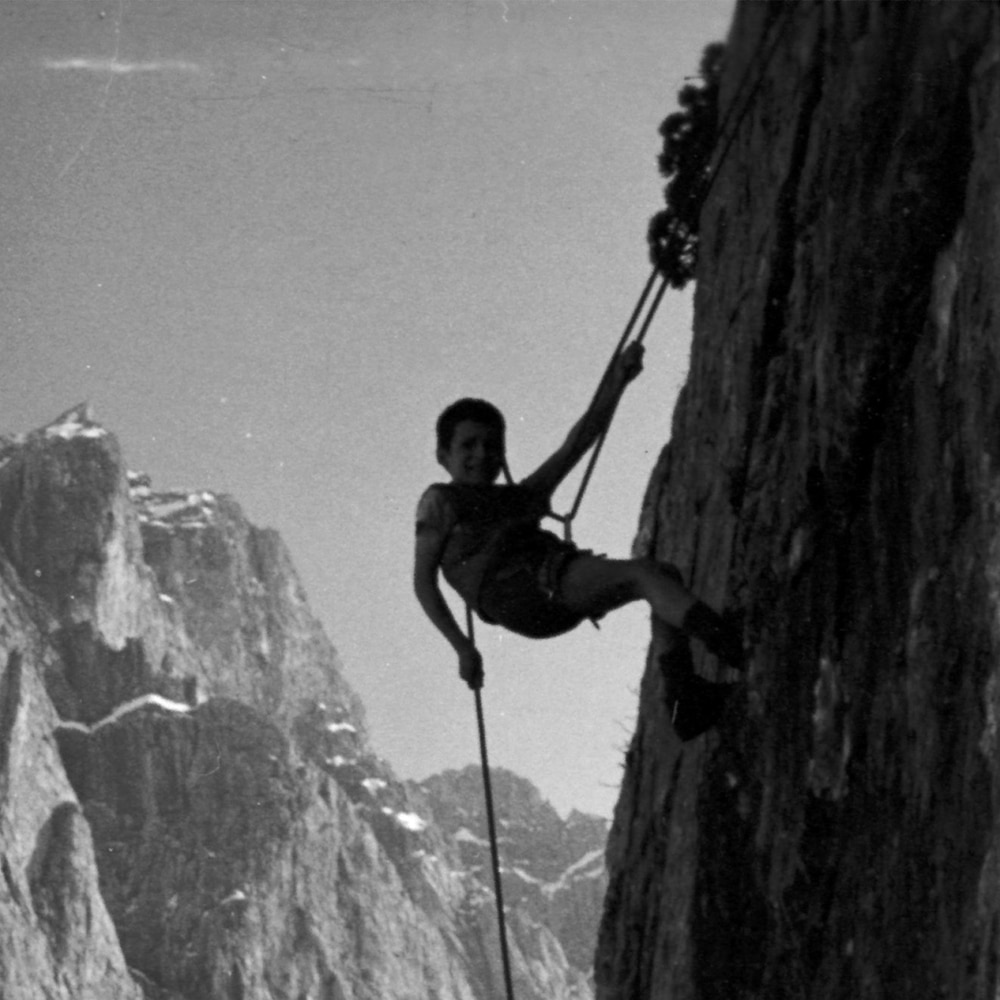
First attempts to climb the Geislerspitzen peaks in the Dolomites
Your journey is marked by extreme, sometimes tragic, expeditions. What do you remember from those years of climbing?
I have always sought to open new routes, to forge my own lines. On Nanga Parbat, in the Himalayas, I lost my brother, and that ordeal profoundly transformed my life. I understood that adventure is first and foremost about survival, not winning. For twenty years, from Mount Everest to the Andes, I climbed the highest mountains in the world looking for simplicity: less equipment, more responsibility. The feat itself never interested me. What matters to me is the relationship with the mountain. A relationship that is both raw and sincere.
After the vertical, you explored the poles, deserts and frozen oceans. What did you find in these spaces and in this horizontality?
The Arctic is, in my eyes, far more fascinating than the great peaks. I led several expeditions there – in Greenland, Franz-Josef-Land, and to the North Pole. While some succeeded, others did not, but they all taught me the same thing, which is that in such environments, every step is a lesson in humility. We must understand that we are dealing with a world without landmarks, a world in flux, where the ice breathes and transforms. I love this idea of walking without certainty, where the human being is no longer a conqueror, but a guest.
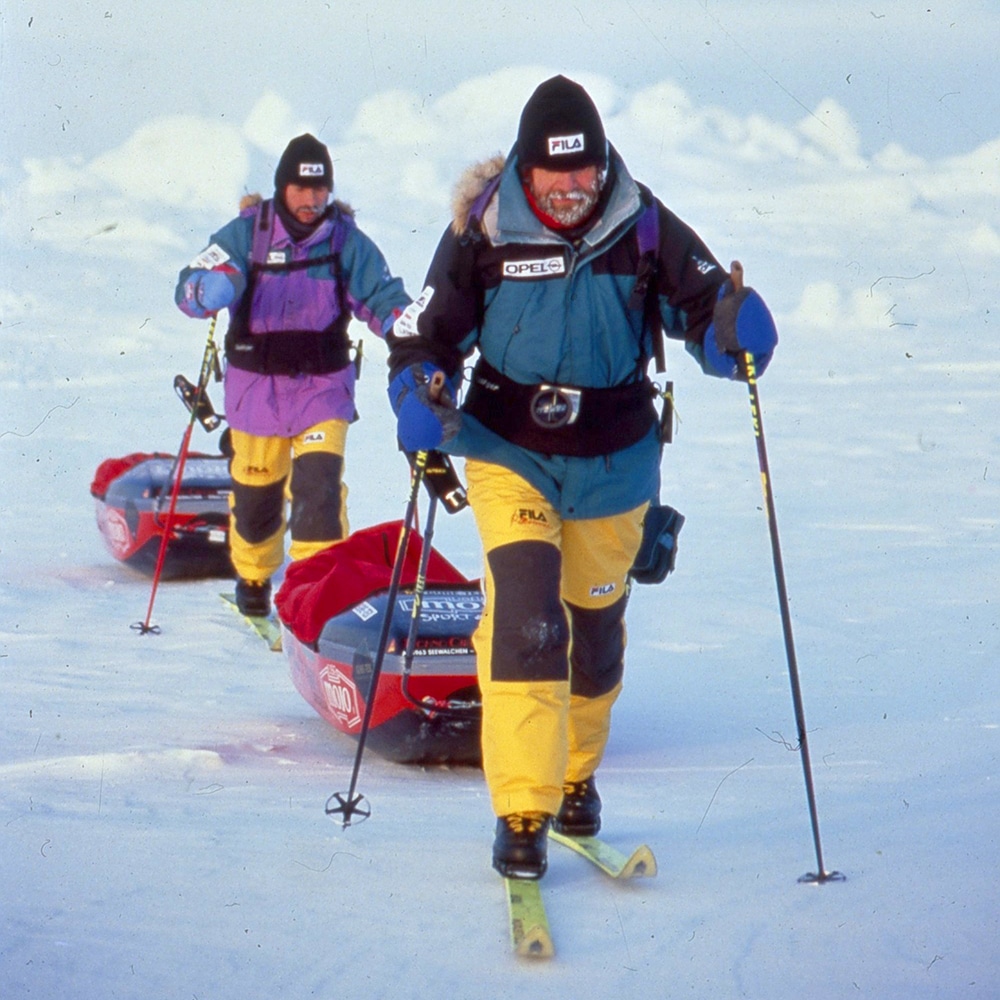
Hubert and Reinhold Messner on their way to the North Pole, 1995
You often talk about “the art of adventure”. What does this expression mean?
The art of adventure is going to the best place and coming back alive without having changed it. It is an education in slowness and silence. Patience, the unpredictable, and sometimes, renunciation, are part of the journey. The modern adventurer often wants to measure everything: speed, performance, success. However, I believe that true adventure begins where control ends. Waiting is part of the art of survival. And surviving is already an art.

The art of adventure is going to the best place and coming back alive without having changed it.
What lessons have you drawn from your contact with elements as powerful as mountains, ice, or altitude?
I have learned that nature is infinitely greater than we are. It creates and destroys on a scale that surpasses our understanding. Climate change is a reality, but it must be observed rigorously before being judged. Mountaineering taught me humility: accepting that I cannot control everything. In the cold, in storms, man becomes vulnerable once again. And perhaps that’s where one truly discovers oneself.
Today, you dedicate a large part of your time to sharing. In what ways do you do this?
I continue to tell stories, through my books, my lectures, and even the mountain museums that I had the opportunity to set up (see boxed text). The recently inaugurated Messner House is a place dedicated to the relationship between humans and nature. I want to show that the mountain is not a backdrop, but a mirror. I believe that we can only truly protect what we know and love. That is why I speak as much of the fragility of the world as I do of its beauty. Future generations must learn to observe before acting.
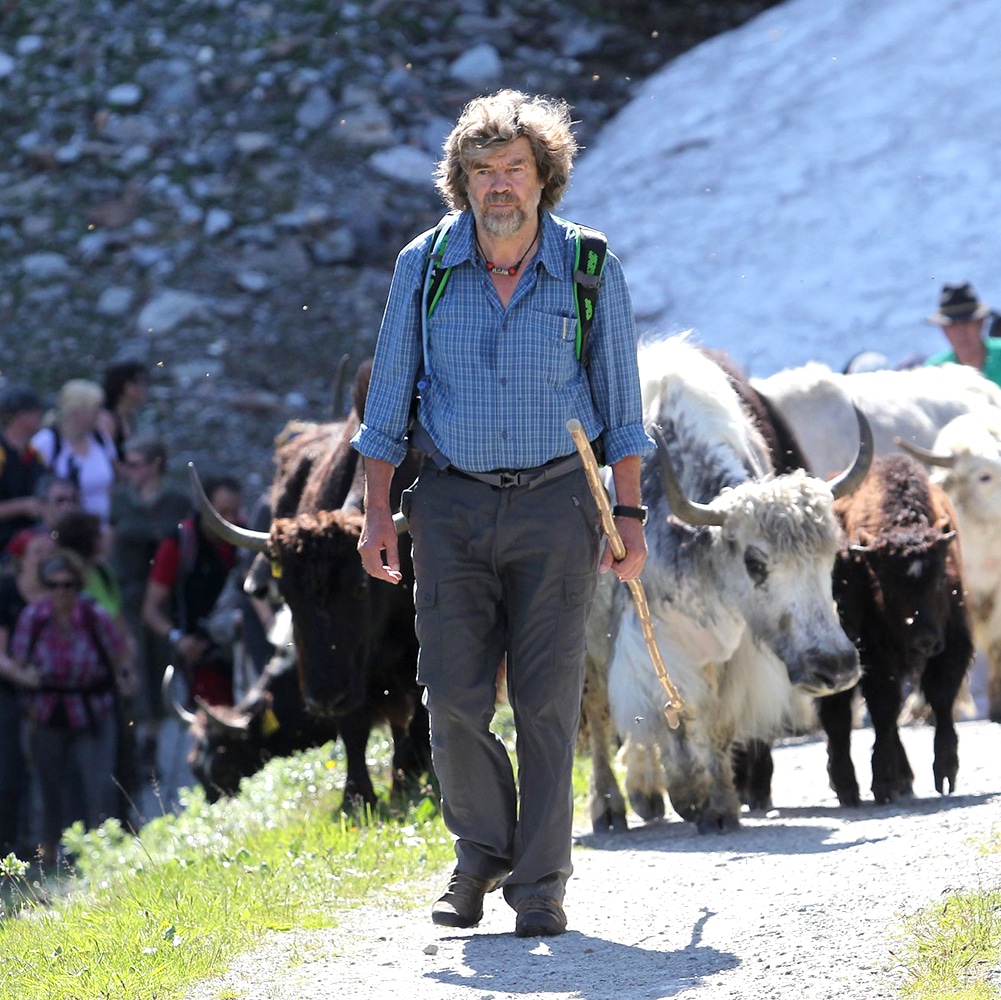
Reinhold Messner accompanying a yak transhumance in Sulden, Trentino-Alto Adige in Italy.
You often say that you are an ordinary man. Is this a form of humility or a deep conviction?
A conviction. I don’t have exceptional physical abilities. My only secret is minimalism: to move forward with little, in order to remain fully responsible. This simplicity has allowed me to understand that the essence of adventure is not in performance, but in awareness. What I always carry with me are my stories. They accumulate, settle, and sometimes rise back to the surface.
In the heart of the Dolomites in South Tyrol lies the unique Reinhold Messner Haus.
This is Reinhold Messner’s most personal project. It tells the story of his beginnings from rock climber to high-altitude mountaineer, and ultimately to a world-roaming adventurer.
The conquest of the poles, South Pole and North Pole, the great journeys across some of the most remote landscapes on Earth — all of these chapters are brought together in one extraordinary house. A place where he invites every visitor to discover something within themselves, while offering a glimpse into the remarkable life of a legend.
Photo credits: Ronny Kiaulehn; Reinhold Messner.
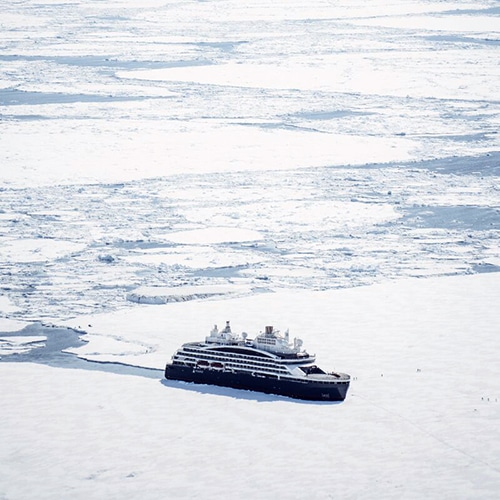
PONANT takes you there
Head for the most inaccessible polar shores