

 Explore to inspire, a PONANT podcast
 PONANT's cruises
An overview of the White Continent
Immense, magnetic, elusive: the White Continent reveals a mosaic of worlds, a patchwork of emotions. From the Antarctic Peninsula to the farthest reaches of the Ross Sea… from the monumental ice of the Weddell Sea to the wind-battered sub-Antarctic islands… embark on a journey to Antarctica in the company of biologist, ecologist and PONANT EXPLORATIONS expedition leader David Beaune.

Contrasting worlds
At first glance, Antarctica appears to be a realm of ice. Yet behind this apparent unity lies a spectacular diversity of landscapes, climates and ecosystems. With an area of some 14 million square kilometres in winter, the continent is much larger than Europe (10.53 million square kilometres), when the pack ice extends over the Southern Ocean.
Each region has its own personality. Some offer sheer mountains and breathtaking fjords, others vast glacial platforms and seas dotted with majestic icebergs. Everywhere, the same sensation dominates: that of entering an extraordinary space in which nature dictates its own laws.

You think you’ve come to see ice, but what you really discover is life.
David Beaune, biologist and PONANT EXPLORATIONS expedition leader
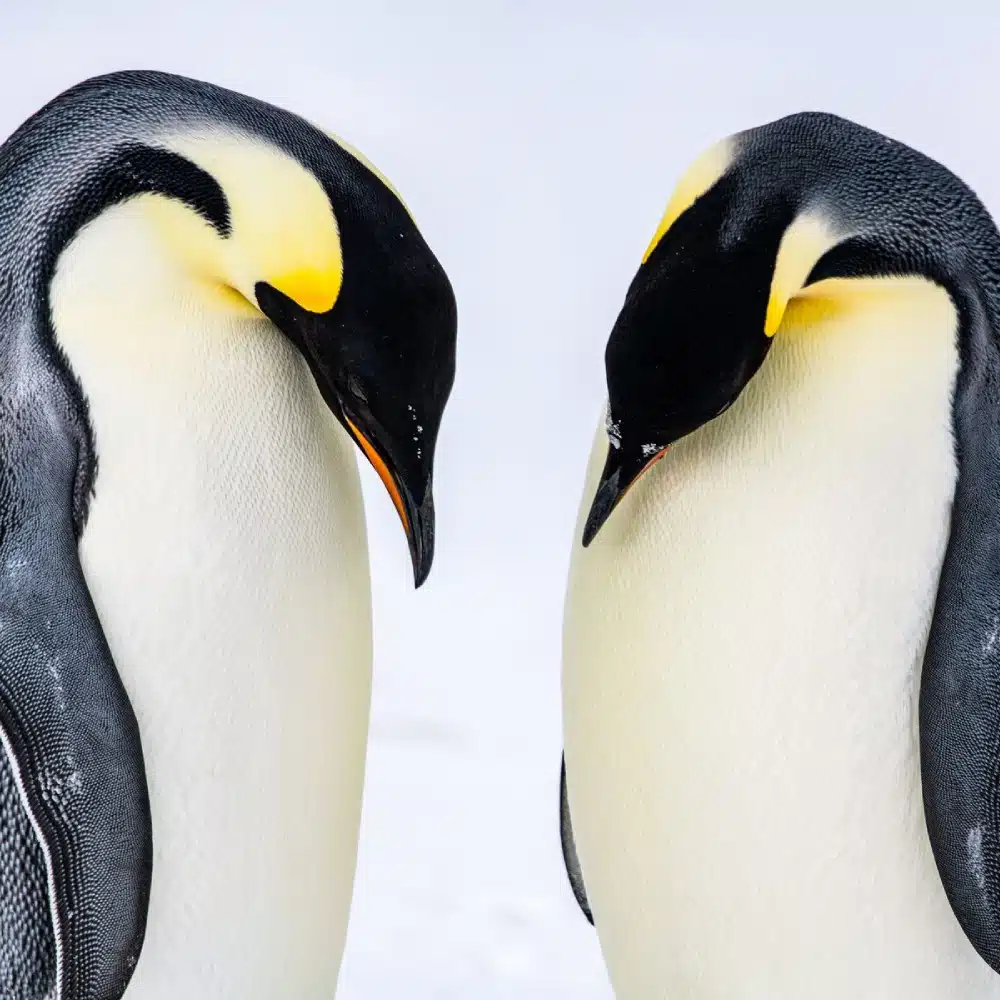
The Emperor penguin: symbol of Antarctica.
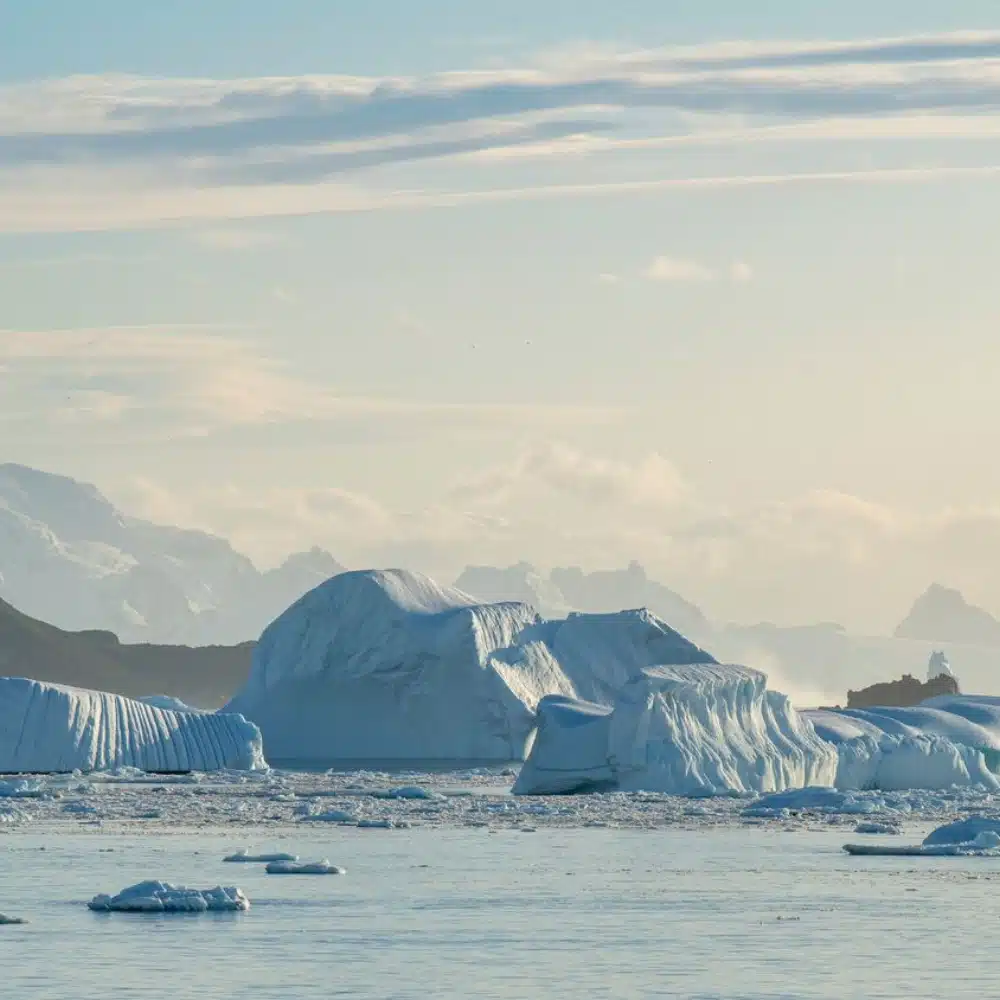
Cierva Cove, on the Antarctic Peninsula, is home to icebergs of almost unreal shapes.

Inside Robert Falcon Scott’s hut, Ross Island, Antarctica.
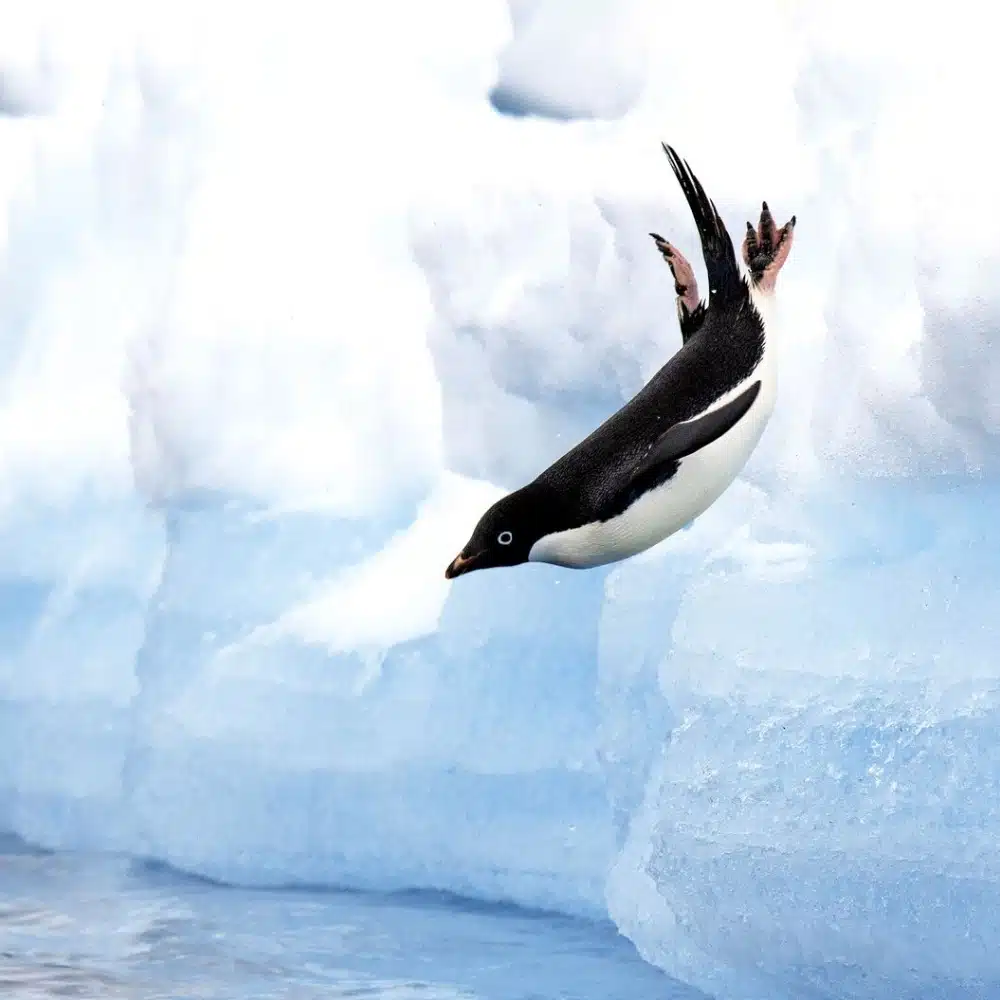
The Adélie penguin: an excellent diver, recognisable by its long tail.
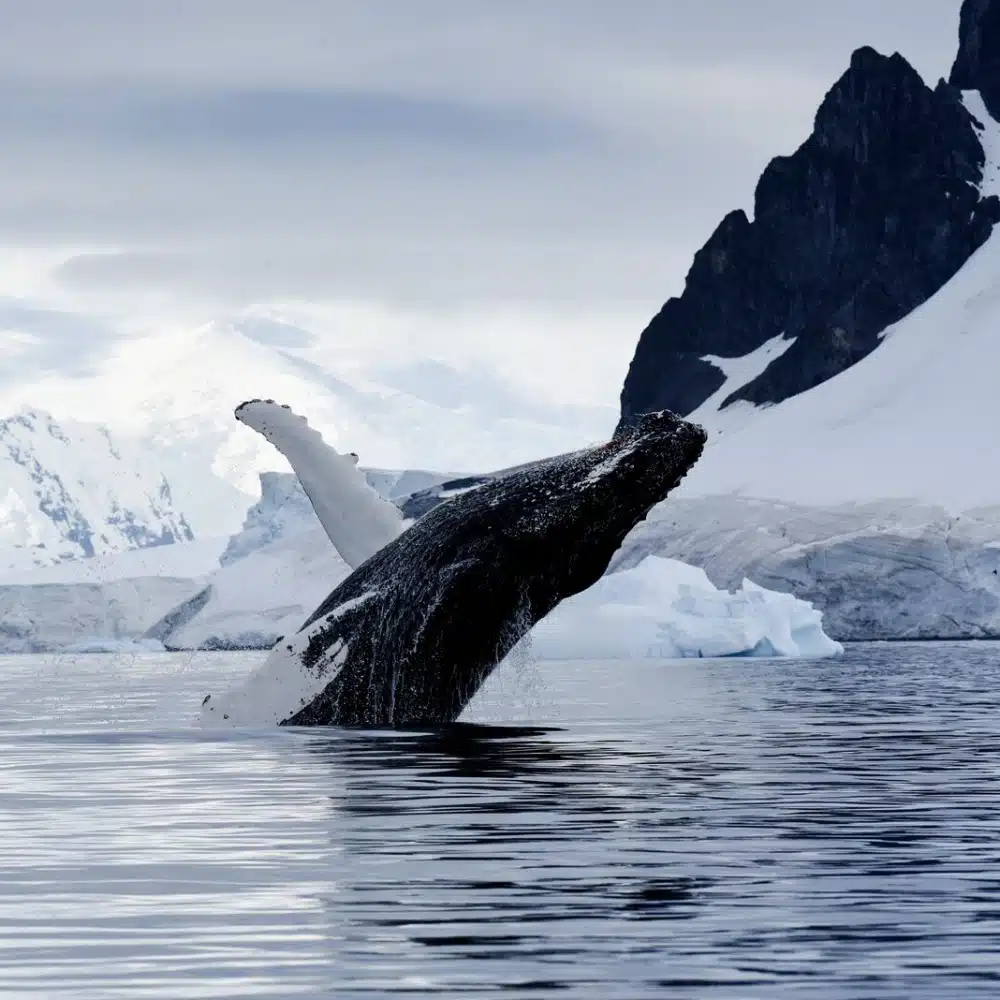
The sight of a breaching humpback whale never ceases to stir the emotions.
A shared ecosystem, suspended in the Southern Ocean

All the Antarctic regions share one key point in common: their dependence on the Southern Ocean. These cold waters support one of the most fascinating biological systems on the planet. At the heart of this mechanism is the krill, a small translucent crustacean that is essential to the food chain. Whales, seals, penguins, seabirds: countless species depend directly or indirectly on this resource.
To observe a colony of penguins, to catch the breath of a whale or to see petrels whirling around is to witness the interdependence of all living things. This fragility explains the importance of conservation policies. The Protocol to the Antarctic Treaty, signed in Madrid in 1991, is one of the most important initiatives. This treaty prohibits all non-scientific forms of exploitation, and defines the area as a “natural reserve dedicated to peace and science”.
My role is to open people’s eyes to the stories of living things.
David Beaune, biologist and PONANT EXPLORATIONS expedition leader
The sub-Antarctic islands: a paradise for the wildlife of the Southern Ocean

A few days’ sail east of Ushuaia, the sub-Antarctic archipelagos of the Falkland Islands, the South Shetland Islands and South Georgia are scattered along the Scotia Ridge. On these remote lands swept by the howling fifties, a teeming array of wildlife thrives: fur seals, Commerson’s and Peale’s dolphins, elephant seals, sei whales, gentoo penguins, albatrosses, and above all, king penguins… Getting up close to their vast colonies, numbering hundreds of thousands of individuals, on the beaches of South Georgia is a rare and intense experience.
The Antarctic Peninsula: the gateway to polar wonders

Stretching out towards South America like an extension of the Andes, the Antarctic Peninsula is one of the continent’s most fascinating regions. It boasts some stunning landscapes: snow-capped peaks, glaciers plunging into the sea, silent channels and drifting pack ice.
Animal life is particularly abundant here. Papuan penguins, crabeater seals, humpback whales and killer whales all have feeding grounds here, where the climate is relatively mild compared with the rest of the continent. The peninsula also bears the memory of the golden age of exploration. The expeditions of Commander Jean-Baptiste Charcot left a lasting imprint, recalling the courage of the pioneers who came to map the unknown.
Antarctica is a world where the elements are still in their raw state. Over there, you get the feeling that humans aren’t the ones calling the shots.
David Beaune, biologist and PONANT EXPLORATIONS expedition leader
Marie Byrd Land and the Thwaites Glacier: the terra nullius…

To the west of the White Continent lies Marie Byrd Land, an immense region of ice and dormant volcanoes with no official sovereign claim – something unique on the planet. Rarely approached, this terra nullius remains one of the world’s most unknown territories.
It is also home to the Thwaites Glacier, an immense cathedral of ice roughly the size of Great Britain, which plays a crucial role in the global balance: if it were to melt, sea levels would rise by 3 metres. At a time when it is being threatened by global warming, its retreat is attracting the attention of researchers around the world.
The Ross Sea: a sanctuary at the end of the world

The Ross Sea is one of the great territories of the emperor penguin. It’s a place where you can get up close with this icon of the polar world. It is the only animal to spend the whole year in Antarctica, on the ice, and has the densest plumage of all the animal kingdom. The Ross Sea colonies.
David Beaune, biologist and PONANT EXPLORATIONS expedition leader
At the geographically opposite end of the Antarctic Peninsula, the Ross Sea offers a more remote, more extreme and even rarer experience. Here stands the mythical Ross Barrier, a monumental wall of floating ice that marks one of the most impressive vistas on the planet. The weather conditions are harsh and the sailing demanding, but the reward is all the more precious as a result.
The region is home to the Ross emperor penguin. The pack ice, marked by the names of Robert Falcon Scott and Ernest Shackleton, acts as a symbol of polar resilience, as does the retiring and elegant Ross seal. The pack ice plays a vital role here, serving as a breeding platform, shelter and hunting ground for many species. It is also a land of memory, marked by the names of Robert Falcon Scott and Ernest Shackleton, key figures in the epic story of Antarctica.
Remnants of the pioneers
At the beginning of the 20th century, Ernest Shackleton and Robert Falcon Scott marked the heroic age of Antarctic polar exploration. Their cabins – departure points for expeditions to the South Pole, still visible in the Ross Sea – are among the most moving remnants of this wind-battered region. Preserved by the cold, they still contain tools and everyday objects that bear witness to past expeditions. The nearby McMurdo and Scott scientific bases continue to explore and study the wide open spaces of the south.
East Antarctica

Distant territories located south of the Indian and South Pacific oceans, Adélie Land (discovered by the Frenchman Jules Dumont d’Urville and claimed by France), Wilkes Land, Queen Mary Land and Queen Maud Land orchestrate a captivating transition between the more temperate worlds of the sub-Antarctic islands and the polar region, offering another interpretation of the Deep South: more plant-based (Maudlandia tundra), more volcanic (Mount Gauss), but just as spectacular.
The Weddell Sea: a kingdom of ice and beauty

The Weddell Sea is the kingdom of ice. The ice is more massive, more present, almost sovereign.
David Beaune, biologist and PONANT EXPLORATIONS expedition leader
To the east of the Antarctic Peninsula, the Weddell Sea has a fascinatingly majestic austerity. More isolated, and often covered by dense ice, it offers a more exclusive voyage, a symbol of something truly exceptional and emotional. The Larsen ice shelves release gigantic icebergs: true floating cathedrals that drift slowly northwards. The unreal power and beauty of the landscape amaze those who witness it, affording precious and rare experiences.
Wildlife has adapted to this demanding environment. There are Weddell seals, leopard seals and Adélie penguins, particularly around Snow Hill Island, home to one of the most iconic colonies of emperor penguins. Light, ice and space create a contemplative, timeless atmosphere.
New Zealand’s sub-Antarctic islands: laboratories of life

The sub-Antarctic islands are worlds apart, and it is often there that life explodes: colonies of birds, penguins, sea lions… a spectacular abundance!
David Beaune, PONANT EXPLORATIONS biologist and guide
Between the Antarctic continent and the waters of the South Pacific off New Zealand lie New Zealand’s sub-Antarctic islands (Antipodean Islands, Auckland Islands, Bounty Islands, Campbell Islands, Snares Islands): windswept lands covered in giant grasses, black cliffs and beaches teeming with life. These wild territories are home to exceptional biodiversity, with albatrosses and elephant seals all finding refuge here.
David Beaune: guardian of life
David Beaune is a biologist, ecologist and expedition leader who accompanies travellers from the poles to the tropics. In the field, his team of nature guides reveals the invisible stories and links behind each landscape. For him, understanding living things is not enough: we must also learn to marvel at them.
Photo credits: ©PONANT/J. Fabro/ S. Flood /I. Dawson /D. Buiron; ©StudioPONANT/ M. Sib, M. Monneret, O. Blaud, N. Michel, S. Adenot, M. Lanco, S. Roux.

PONANT takes you there
Explore all the treasures of the White Continent