

 Explore to inspire, a PONANT podcast
 PONANT's cruises

Travelling with the Seasons
French Polynesia captivates visitors with its remarkable diversity, from lush green islands and turquoise lagoons to its rich cultural heritage. While the dry season, from May to October, is particularly popular thanks to its more favourable weather conditions, the months from November to April also offer pleasant conditions and tend to be less crowded.
When Is the Best Time to Visit Polynesia?

Located on the Tropic of Capricorn, French Polynesia enjoys a tropical climate with two distinct seasons:
- From May to October: the dry season, sometimes referred to as the cool season, coincides with the austral winter. This season is characterised by temperatures ranging from 25°C to 28°C and less frequent rainfall.
- From November to April: the wet season, sometimes referred to as the warm season, corresponds to the austral summer. During the wet season, rainfall is heavier and more frequent, while higher temperatures—typically between 27°C and 31°C—are accompanied by increased humidity.
French Polynesia spans a vast area, and climatic conditions can vary significantly from one archipelago to another.
The Dry Season: May to October

The trade winds—steady, moderate winds blowing from the south-east—help maintain pleasant temperatures and keep the skies clear, ensuring remarkably stable weather conditions.
Moderate temperatures and calm seas provide ideal conditions for exploring the lagoons. Beneath the surface, the vibrant marine life thrives in waters with exceptional visibility, making this a particularly appealing time for diving and snorkelling. The dry season is an ideal time to explore the islands by sea, with calm sailing conditions and outstanding light that brings out the full spectrum of colours in the landscape.
From July to October, humpback whales can also be seen in Polynesian waters. Some of these marine mammals grow to lengths of up to 15 metres and migrate to the archipelago to give birth and nurture their calves during their first weeks of life.
The Wet Season: November to April

Characterised by higher temperatures and more frequent rainfall, the wet season brings a different character to the Polynesian landscape. Valleys become cloaked in lush vegetation, while waterfalls, fed by seasonal rains, grow even more spectacular.
Although showers are more frequent, they often take the form of intense but short-lived tropical downpours, followed by long sunny spells. Visitor numbers are generally lower during this period, making the wet season an opportunity to experience the islands from a different perspective and enjoy a more authentic glimpse of local life.
Climate and Seasons in French Polynesia
Each season offers a different perspective on French Polynesia, with its own distinctive appeal. Whether you’re drawn to the refreshing trade winds of the dry season or the warmth of the austral summer amid more luxuriant landscapes, the time of year shapes the travel experience and reveals different facets of the Polynesian archipelagos.
| Period | Weather conditions | Sea conditions | Recommended activitie |
|---|---|---|---|
| January to February |
  27-31°C |
 |
Hiking |
| March to April |
27-30°C |
|
Sailing in a traditional outrigger canoe, visiting botanical gardens |
| May to June | 25-28°C |
 |
Diving, Snorkelling |
| July to August | 24-27°C |
|
Whale watching, snorkelling |
| September to October |
25-28°C |
|
Diving , Whale watching |
| November to December |
27-30°C |
|
Traditional crafts, sampling seasonal fruits |
Each Archipelago Reveals a Different Side of French Polynesia Throughout the Year
French Polynesia’s waters cover almost 5 million square kilometres, and several thousand kilometres separate the northernmost islands from the southernmost territories. While all of French Polynesia enjoys a tropical climate, each archipelago has its own distinctive characteristics. Temperatures, rainfall and sailing conditions can vary considerably depending on the region and the time of year.
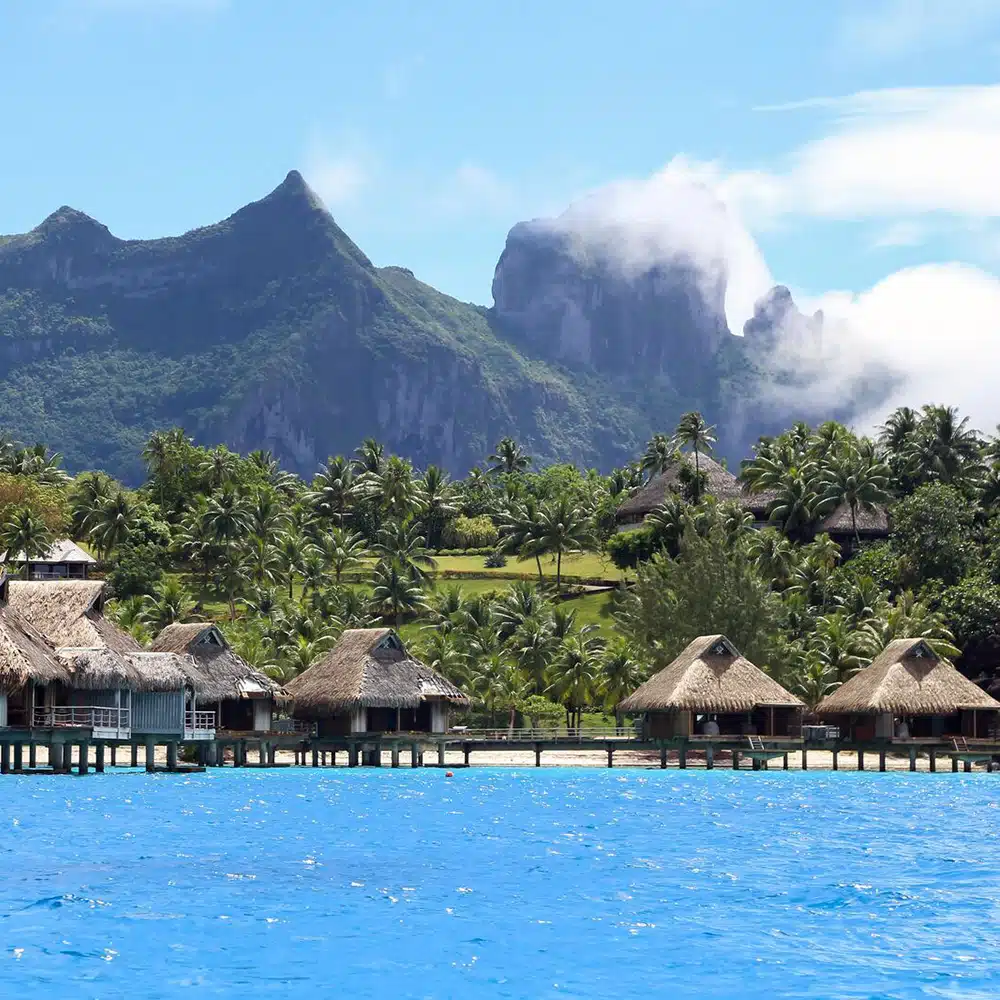
Tahiti and the Society Islands (Moorea and Bora Bora)
From nearby Moorea to Bora Bora, some 260 kilometres from Tahiti, the Society Islands are renowned for their volcanic landscapes, white-sand beaches and turquoise lagoons. The months from May to October (the dry season) are generally considered the best time to explore the archipelago, with temperatures averaging around 26°C and less frequent rainfall. These conditions are ideal for inland excursions, water-based activities and discovering the iconic landscapes of Bora Bora and Moorea.

The Tuamotu Archipelago: Atolls and Exceptional Diving
The Tuamotu Archipelago is particularly renowned for its diving. September and October, towards the end of the dry season, are often considered among the best months to visit, with generally lighter winds and excellent visibility in the passes of Rangiroa and Fakarava. These conditions are ideal for observing a rich variety of marine life, including tropical fish, manta rays and several species of reef sharks.

The Enchanting Marquesas Islands
Located around 1,500 kilometres north-east of Tahiti, the Marquesas Islands enjoy a climate that differs from the rest of French Polynesia. Rainfall is distributed differently throughout the year in this region, and certain periods – particularly between October and December – often combine plenty of sunshine with favourable hiking conditions. At this time, the rugged landscapes of Nuku Hiva and Hiva Oa are particularly rewarding to explore, with their deep valleys, archaeological sites and sweeping views over the Pacific Ocean.

Secluded Islands on the Edge of French Polynesia
Further south, the Austral and Gambier archipelagos enjoy slightly cooler temperatures than the rest of French Polynesia. The months from July to September, during the dry season, also coincide with the presence of humpback whales in the Austral Islands. At this time of year, islands such as Rurutu and Mangareva reveal unspoilt landscapes of volcanic peaks, lagoons and remote villages. The season also offers pleasant conditions for exploring these archipelagos, far from the usual tourist routes.
Choosing the Best Time to Visit French Polynesia
Whether you choose the dry season or the wet season, the best time to visit French Polynesia ultimately depends on the experience you seek.
For the Most Favourable Weather Conditions

Between June and September, during the dry season, you can generally expect sunny days, pleasant temperatures and lower humidity levels. This is an ideal time for island-hopping, outdoor excursions and water-based activities in the lagoons. Sea conditions are also often more stable, providing ideal conditions for exploring several archipelagos. For travellers looking to combine cultural discoveries, volcanic landscapes and activities on the water, these months are among the most popular times to visit French Polynesia.
For Diving and Snorkelling
The period from April to October is generally considered the best time for diving and underwater photography. Less frequent rainfall helps maintain excellent underwater visibility. In the passes of the Tuamotu Archipelago and the lagoons of the Society Islands, clear waters provide an ideal setting for observing a rich variety of marine life, including tropical fish, sea turtles and manta rays among the coral reefs. From July to October, humpback whales add a spectacular dimension to the experience. Among the largest marine mammals in the world, they can often be observed in Polynesian waters during this period.

During the wet season, particularly in November, March and April, French Polynesia generally sees fewer visitors. Some of the best-known sites, including the lagoons of the Society Islands and villages in the most visited archipelagos, tend to be less crowded at this time of year. Travelling at this time of year offers more peaceful stopovers, greater availability and a more relaxed way to discover the islands’ landscapes and local traditions. Weather conditions also remain favourable for a wide range of activities, despite more frequent rainfall than during the dry season.

When Is the Best Time for a Cruise in Polynesia?
A cruise is an ideal way to discover French Polynesia island by island and explore the diversity of its archipelagos. The volcanic peaks of the mountainous islands contrast with the coral atolls and lagoons that characterise this Pacific territory. PONANT EXPLORATIONS offers a range of cruises in French Polynesia throughout the year, allowing travellers to experience the destination in different seasons. On board, the Gauguines and Gauguins share their knowledge of Polynesian culture and traditions.

When Is the Best Time to Visit Bora Bora?
Known as the “Pearl of the Pacific”, Bora Bora has plenty to offer all year round. While the dry season is often chosen for its sunnier, drier conditions, the wet season offers warmer temperatures, vibrant vegetation and fewer crowds. The lagoon, the motus and the views of Mount Otemanu are among the island’s main attractions, whatever the time of year.

What Is the Water Temperature in Polynesia?
The Pacific Ocean is warm enough for swimming throughout the year, with an average water temperature of 28°C. Temperatures peak at around 30°C during the austral summer, particularly in the shallow lagoons of the Tuamotu Archipelago and the Society Islands. In the Marquesas Islands, the absence of a barrier reef allows ocean waters to circulate freely, helping to maintain a consistent temperature of around 27°C throughout the year. Further south, water temperatures in the Austral and Gambier archipelagos are more variable, dropping to around 24°C between July and September. This relatively cool water appeals to travellers seeking a more refreshing swimming experience.
Photo credits: ©PONANT / J. Fabro; ©R. Paperno; ©PAULGAUGUIN-PONANT / T. McKenna; ©PONANT / Alex Stead; ©Studio PONANT / S. L. Payan / Laure Patricot / J. Leclerc / T. Amisse.

PONANT Takes You There
Explore Polynesia in Every Season