

 Explore to inspire, a PONANT podcast
 PONANT's cruises

Journey to the heart of the Pacific Ocean
With its coral atolls and jagged volcanic landscapes, French Polynesia offers lagoons of infinite variations. From the iconic island of Bora Bora to the secret sanctuaries of the Tuamotu Islands, embark on a journey to five exceptional and unspoilt marine gems, each of which embodies the legendary Polynesian concept of mana.
Which are the most beautiful lagoons in Polynesia?
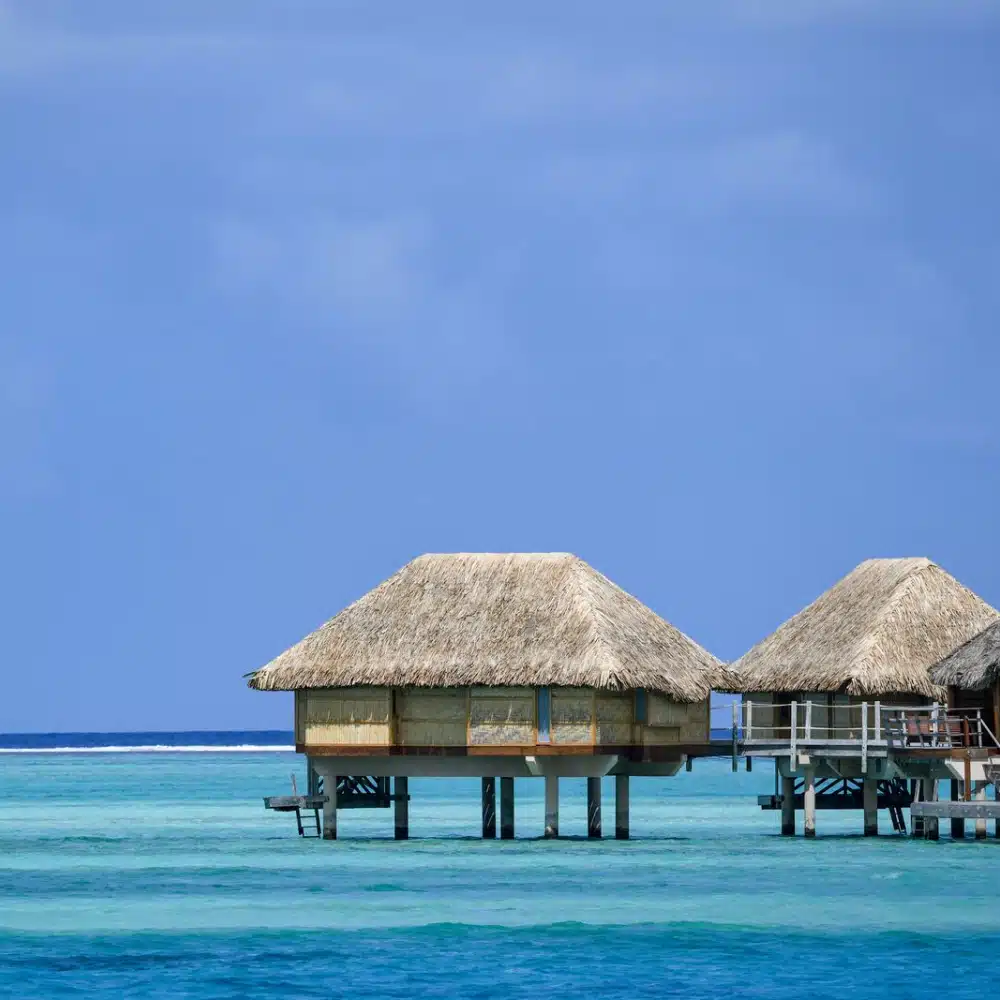
Bora Bora, Rangiroa, Fakarava, Moorea and Taha’a illustrate the many faces of the Polynesian lagoon. From romantic settings to protected marine sanctuaries, from the aquatic wonderland of the coral gardens to the infinite horizons of the open sea, each lagoon asserts its own identity, its own rhythm and its unique scenery. Which one will be part of your next trip to Polynesia?
| Lagoon & Archipelago | For whom? | For what experiences? |
|---|---|---|
| Bora Bora (Society Islands) |
Romantics and aesthetes | Honeymoons, watching the sun set over Mount Otemanu, swimming with leopard rays |
| Rangiroa (Tuamotu) |
Robinson types and lovers of the open sea | Swim with sharks in the Blue Lagoon, land on the sandbanks of Les Sables Roses, observe dolphins in the Tiputa Pass, learn about black pearl cultivation |
| Fakarava (Tuamotu) |
Explorers and lovers of unspoilt nature | Watch the ballet of grey sharks and giant clams in the South Pass, marvel at the pink sand beaches |
| Moorea (Society Islands) |
Families and outdoor enthusiasts | Glide over the coral reefs in a kayak, hike with views over the lagoon, watch whales offshore |
Bora Bora, the pearl of the Pacific
The diamond of the Leeward Islands and guarded by Mount Otemanu, which rises to a height of 727 metres, Bora Bora is an unparalleled marine amphitheatre, where black basalt peaks plunge into a palette of turquoise hues.
A coral amphitheatre sculpted by the volcano

As the ship approaches Bora Bora, the dark, rocky silhouette of Mount Otemanu contrasts with the motu’s crown of white sand that encircles the lagoon. The lush slopes of the volcano, where hibiscus flowers bloom, descend towards brilliantly clear water that, sheltered by the coral reef, displays an infinite variety of blues.
The panorama from the top of Pahonu hill takes in the turquoise hues of the lagoon that darken into the navy blue of the open sea. In Vaitape, stroll among the stalls offering local crafts and Tahitian pearls. On Matira beach, renowned as one of the most beautiful on the island, the fine sand invites you to linger until sunset, while the palm trees sway gently in the breeze.
Up close with the rays and the lagoon’s wildlife

While ancestral outrigger canoes (va’a) leave their wakes on the surface of the lagoon, stingrays and leopard rays glide through its warm and transparent waters. This might be an opportunity to try to get as close as possible to them, accompanied by a nature expert or some local sailors. Accustomed to the presence of boats, they will sometimes come within arm’s reach.
But the lagoon holds other wonders still, revealed on a snorkelling expedition among the coral heads – isolated formations resting on the sandy ocean floor – where schools of tropical fish and harmless blacktip sharks cross paths in a slow and graceful aquatic dance. A manta ray might even come to greet you, its broad wings spread above the white sand.
Rangiroa, the immensity of the Tuamotus
Meaning “vast sky” in the Tuamotu language, Rangiroa replaces terrestrial landmarks with a lagoon over 1,400 km² in size. Hundreds of coral islets are dotted around this veritable inland sea, where the water merges with the horizon.
The mirage of the Blue Lagoon and the pearls of the atoll

To the west of the atoll, the Blue Lagoon resembles a mirage. A veritable lagoon within a lagoon, this natural pool surrounded by a string of white sand motus serves as a refuge for dozens of young blacktip reef sharks and lemon sharks swimming peacefully in less than a metre’s depth of crystal-clear water. A veritable open-air nursery!
Between the villages of Avatoru and Tiputa, life flows along a narrow ribbon of coral. At the heart of daily life on this island is a treasure: the black pearl of Tahiti. Visit a pearl farm to discover the secrets of these lagoon jewels and admire the goldsmith-like gestures of the grafting specialists. And even more unexpected are the few acres of land that boast the only vineyard in the tropics. In quite the feat of winemaking, the vines rooted in the coral limestone give rise to the surprising wines of Tahiti.
The Tiputa Pass, the great pelagic theatre

In the late afternoon, the edge of the Tiputa Pass is the place to be. When the outgoing current meets the ocean swell, powerful rollers form at the mouth of the channel. The pass then becomes a playground for a colony of large dolphins, who come to cut through the foam and surf the waves just a few metres from the shore, under the benevolent gaze of a few villagers.
Beneath the surface, the pass offers one of the most beautiful underwater displays in the world. Carried on the flow of the rising tide, whether diving or snorkelling, glide effortlessly above the steep drop-off, a vertiginous cliff that plunges into the deep blue of the ocean. A spectacular drift through the coral canyons, amidst dense schools of silver trevally, sea turtles and barracudas.
Fakarava, an underwater sanctuary
Listed as a biosphere reserve by UNESCO, the Fakarava Atoll is famous for its vast lagoon, a refuge for an original, unspoilt marine ecosystem.
UNESCO biosphere reserve and island life

Time seems to have stood still In Tetamanu, at the southern end of atoll. This place, the former capital of the Tuamotu, is now almost deserted. Between paths of white sand and coconut trees are the village’s few scattered dwellings, watched over by a chapel dating from 1874, built from coral blocks weathered by sea spray. A place of memory, of stone and silence.
This tranquillity extends beneath the surface of the water. From the monumental Garuae Pass in the north to the motu in the south, Fakarava is home to an unspoiled aquatic world, listed as a biosphere reserve by UNESCO. Here, immense massifs of living coral flourish, where butterflyfish and groupers swim between giant clams with lips edged in hues of cobalt blue and emerald.
The ballet of the Tetamanu sharks

South of Fakarava, the south Tumakohua Pass is home to the legendary “wall of sharks”. Far from the juveniles in the Blue Lagoon or Bora Bora, this is the domain of grey reef sharks. They gather here by the hundreds in a slow, silent, circular dance. Suspended almost motionless in the current, they make a striking sight.
After the excitement of the pass, the scenery softens on the deserted motus bordering the south of the atoll, renowned for their sandbanks in shades of pink. This natural hue is the result of the erosion of fragments of red coral and tiny seashells mixed with white sand. Stroll at the water’s edge, between exposed sandbanks and turquoise lagoons, for a moment of pure disconnection miles from anywhere.
The lagoon and mountains of Moorea
Moorea, Tahiti’s sister island, presents some spectacular landscapes, with the sculpted silhouette of sharp volcanic ridges overlooking two majestic bays and a breathtakingly beautiful lagoon.
The sacred fjords of Cook’s Bay and Opunohu Bay

Arriving at Moorea reveals two tropical fjords with strikingly vertical settings. Cook’s Bay and Opunohu Bay sit on either side of Mount Rotui, its peaks rising from jagged sides that plunge into the emerald sparkle of the lagoon and give the island, when viewed from above, its trident-like shape.
Inland, the panorama from the viewpoint, at an altitude of 240 metres, embraces the entire Opunohu valley, up to the profiles of Mount Tohiea and Mou’a Puta, the pierced mountain. Further down, the pineapple road winds through plantations and rainforest. The valley also holds the memory of Polynesian traditions: Marae Titiroa is one of the largest sacred sites in Polynesia.
Gentle canoeing and a whale sanctuary

The island of Moorea lends itself perfectly to peaceful nautical excursions. In a va’a (a traditional outrigger canoe) or a kayak, pass by the green motus that line the coast, in calm, transparent water. Further on, the shores of Temae reveal an immense beach of white sand, with Tahiti rising up on the horizon.
Beyond the coral reef, the ocean becomes whale and dolphin territory. Long-beaked dolphins, rough-toothed dolphins and pilot whales live here year-round, swimming like guides around the boats. From August to October, the thrill is even greater when the humpback whales return to these warm waters to give birth, watching over their calves a few cable-lengths from the reef.
Taha’a: the heart of the coral gardens
Nicknamed “the vanilla island”, Taha’a shares its vast lagoon with its neighbour Raiatea. This island, its coastline notched with deep bays, is only accessible by sea and has a secluded atmosphere, much like its delicate orchid that grows out of sight.
Scents of vanilla and coral gardens

The trade winds carry the warm, sweet scents of the Vanilleraie workshops from the valleys to the sheltered bays. A family-run plantation may invite you in to share the secrets of the famous orchid. This expertise is passed down from generation to generation, from the manual pollination of the flowers to the slow drying of the pods that gradually release their flavour.
Between two motus, a shallow channel leads to the coral garden, the island’s undisputed underwater treasure. Drift on the gentle current of its waters, among fluorescent giant clams and a whole wonderland of tropical fish: hundreds of butterflyfish, clownfish nestling in their anemones, and schools of multicoloured surgeonfish.
Motu Mahana, a secret islet dream

A heavenly stopover on this private islet of white sand is accompanied by a sumptuous traditional feast. Tables are set at the water’s edge for lunch featuring fish grilled over a wood fire and other local specialties. Just a short swim from the shore is a floating bar – a perfect way to prolong this idyllic experience, coconut juice in hand, in the turquoise restfulness of the lagoon.
Under the coconut trees, the sound of ukuleles and traditional songs set the tone for the afternoon. On the sand, Polynesians demonstrate the art of weaving, skilfully shaping hats and baskets from fresh palm fronds. Away from all this congenial activity, a few strokes of the kayak paddle are enough to find the calm of the lagoon, gliding on clear water between the white sand of the beach and the reef.
Discover the lagoons of Polynesia with PONANT
Whether crossing the passes at daybreak, dropping anchor in the hollow of a deserted atoll, and watching volcanic peaks give way, in the space of just a few miles, to ribbons of coral rising above the surface : sailing remains the most intimate way to connect with these island territories. On a cruise in French Polynesia with PONANT EXPLORATIONS GROUP, sail on the Paul Gauguin close to shallow lagoons, between the Society Islands and the Tuamotu Archipelago, with an exclusive stopover at the motu Mahana.
In season, the Jacques Cartier maintains its spirit of intimate exploration, connecting the underwater sanctuary of Fakarava to the steep cliffs of the Marquesas, before reaching the little-known Austral and Gambier Islands. Two complementary maritime options that introduce guests to the full uniqueness of the Pacific and the archipelagos of French Polynesia.
Photo credits: ©PONANT-Tim Mckenna; Julien Fabro; RogerPaperno; StudioPONANT/Thibault Garnier; Etienne Gontier; Margot Sib; Ronald Vitaloni; Jon Whittle; Paul Gauguin Cruises; iStock.
PONANT takes you there
Discover the most beautiful lagoons in Polynesia