

 Explore to inspire, a PONANT podcast
 PONANT's cruises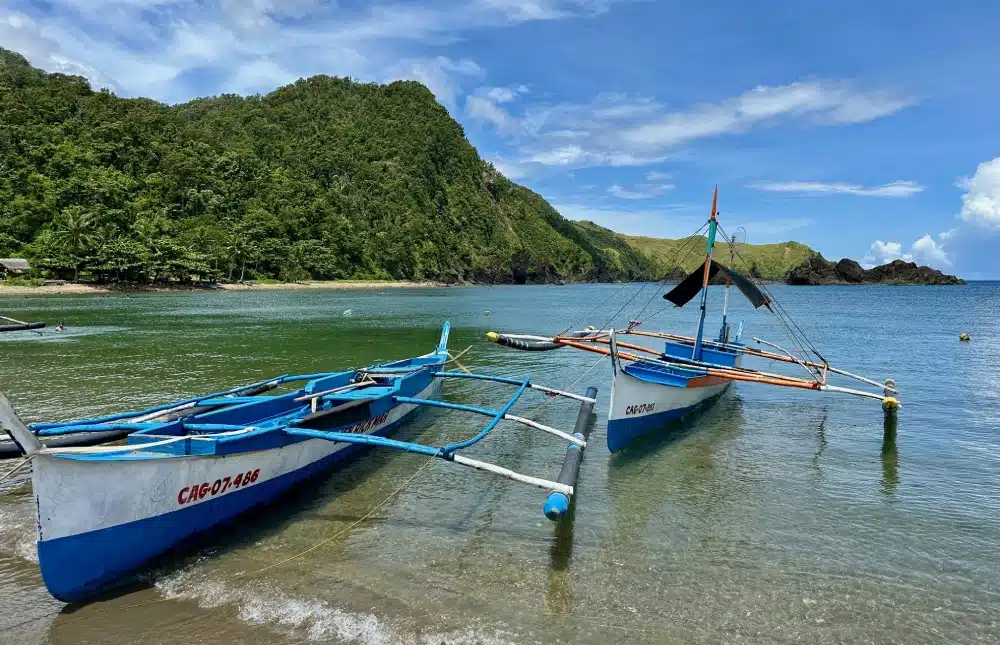
From Hispanic heritage to the lagoons of Palawan
With over seven thousand islands dotted along the Pacific Ring of Fire, the Philippines are at the crossroads of a unique set of influences shaped by an encounter between Asia and Spain, then America. Guided by Sylviane de Tracy, Research & Development Director at PONANT EXPLORATIONS, who has just returned from a reconnaissance trip to the archipelago, we invite you to explore the natural and cultural treasures of this generous nation.

Travel back in time in the streets of Vigan
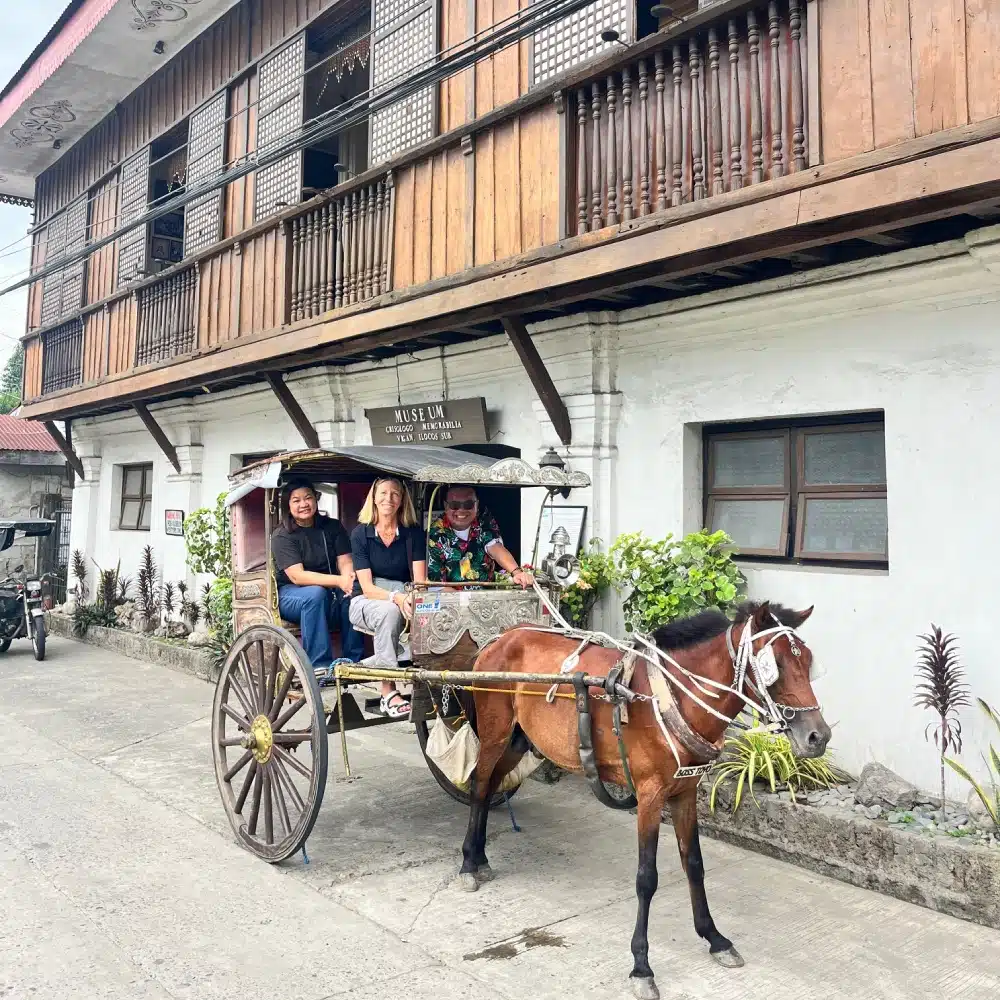
The town of Vigan emerges like a mirage of stone and history in the north of the vast island of Luzon, transporting you from the tropical heat of the archipelago to 16th century Spain. The silence of its cobbled streets is broken only by the gentle clip-clop of its horse-drawn carriages from another era, known as kalesas. Through windows in Capiz mother-of-pearl, Asia’s oldest colonial city offers you a miraculously well-preserved theatrical setting.
Ride through the history of Currimao on a tuk-tuk

Some unexpected discoveries await close to Currimao, where an entire site facing the sea has been rebuilt, stone by stone, from historic monuments that have been saved from ruin. Hopping aboard a tuk-tuk is the best way to explore this maze of memories. “Choosing local operators offers a privileged moment of connection,” highlights Sylviane de Tracy. It also provides a rare and intimate glimpse of the country.
The Philippines: an archipelago of over 7,000 islands
With a total of 7,641 islands, the archipelago is divided into three main regions: Luzon in the north, the Visayas in the centre and Mindanao in the south. On the western flank, a string of islands links Luzon to the province of Palawan, a wild spit of land that stretches towards the South China Sea.
Stroll around an old American military base in Corregidor

Once a quarantine station on the legendary Acapulco-Manila trade route, Corregidor is located at the entrance to Manila Bay and was once the stage of a tragic Second World War blockade. Now, the jungle is slowly colonising the old American military base, its rusty cannons providing welcome perches for birds. Here, the forest is healing the wounds of history in undisturbed quietude.
Acapulco-Manila: the galleon route
For over two centuries, this was one of the world’s longest and most important shipping routes. Spanish galleons carried silver from the Americas to Manila, where it was exchanged for silks, porcelain and spices from Asia. This transpacific conveyance transformed the archipelago into a leading hub of globalisation and forged its unique identity as an Asian nation steeped in Hispanic culture and Catholicism.
Dive into dizzying Manila

Manila is the capital of the Philippines and a sprawling megalopolis that draws you into its dizzying explosion of life. Behind the modern facade of its skyscrapers lingers the city’s Hispanic soul, sheltered by the walled fortifications in the Intramuros district. Another unexpected sanctuary is the American cemetery: with its vast lawns peppered with trees, it is a haven of serenity amidst the hustle and bustle of the city.
Roads are the vibrant theatres of everyday life
Roads in the Philippines set their own pace. Here, the tarmac isn’t just for going from point A to point B: it’s an extension of Filipino homes. “There’s always something going on there,” explains Sylviane de Tracy. Colourful stalls, sleepy dogs and giggling children vie for a place on the road, while whole families pile onto motorbikes and defy the laws of gravity!
Swim in the turquoise waters of Palawan

Head for the island of Palawan, and Coron in particular, where black limestone cliffs stand out against the horizon before joining the sea that glitters with a thousand shades of blue. In the depths of this fascinating mineral labyrinth, lakes and lagoons reveal crystal-clear waters that are ideal for a spot of undisturbed snorkelling. Picture yourself: a tiny speck swimming weightlessly at the foot of some truly vertiginous stone cathedrals!
Explore a secret river in Puerto Princesa

Make sure you don’t miss another Filipino treasure located further south and listed as a UNESCO World Heritage Site: the underground river of Puerto Princesa. Accessing it is a challenging expedition in its own right! After crossing the jungle, you board a bangka to glide beneath the rock. In the silence of the cave, the pirogue reveals an imposing natural cathedral sculpted by water and time.
Dive around a cemetery of Japanese ships in Coron
The waters of Coron are the grail of divers everywhere! In September 1944, a Japanese fleet was sunk in Coron by American aircraft and today, a dozen ships lie at shallow depths. Marine life has taken over the steel: soft corals and schools of tropical fish dance around the ghostly structures of the Okikawa Maru and Irako. This underwater exploration reveals a piece of history at every turn.
Sample the enthusiasm of the Filipino people
Beyond the landscapes, a trip to the Philippines promises “a lesson in life” according to Sylviane de Tracy. Every remote village offers the same smiles and warm welcome. The children’s initial shyness quickly gives way to curiosity and bursts of laughter in testimony to the country’s deeply rooted culture of hospitality. This warmth is fuelled by their active faith that is also evident in the country’s places of worship – real hubs of life that act as an invisible cement that binds communities in a shared sense of dignity.

A Catholic exception in Asia
With over 80% practising Catholics, the Philippines is the only major country in Asia to have a mainly Catholic population (alongside Timor-Leste). This unique spiritual profile is the legacy of three centuries of Spanish presence and is embodied by a guiding icon: the Santo Niño. Gifted by Ferdinand Magellan in 1521 for the first baptisms in Cebu, this statuette of the Infant Jesus is the country’s oldest religious relic and remains the subject of huge popular devotion. It is also a protective symbol that watches over the entire archipelago.
Sylviane de Tracy’s favourites
“During my reconnaissance trip, I visited some ports of call that are still largely unknown to tourists. One such gem was my stopover at Claveria, a fishing village that boasts a paradisiacal bay with turquoise waters, a forest of coconut trees in the background and a beach with a hundred or so outrigger canoes used for fishing. It’s extraordinary! The Batanes, which are closer to Taiwan than the Philippines, are also remarkable. With their green meadows, cows and rolling hills, you’d be forgiven for thinking you were in Scotland!”

Photo credits: Sylviane de Tracy; iStock

Let PONANT take you there
Cruise along the most beautiful coastlines in the Philippines