


 Explore to inspire, a PONANT podcast
 PONANT's cruises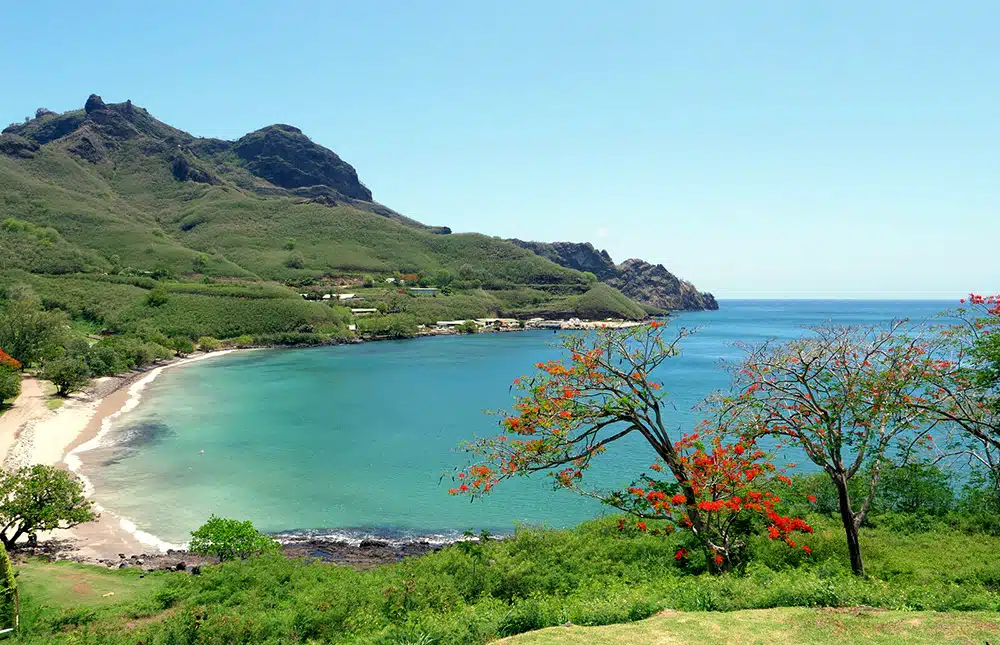
A Unique Archipelago in French Polynesia
Emerald-green volcanic peaks rise from the vast expanse of the South Pacific Ocean, 1,500 kilometres north-east of Tahiti… This isolation has shaped the Marquesan culture, making it distinct from the rest of French Polynesia. To help you prepare for your trip to the Marquesas Islands and make the most of their spectacular landscapes and rich traditions, here are some travel tips, enriched by insights from local guide Aniata Kimitete.
Where Are the Marquesas Islands? A Remote Paradise Worth the Journey
The Marquesas are one of the five archipelagos of French Polynesia alongside the Society Islands, the Tuamotu Archipelago, the Austral Islands and the Gambier Islands. Far from any continent, they are among the most remote inhabited places on Earth.

Given the archipelago’s remote location, the first step in getting to the Marquesas Islands is to fly into Tahiti, in the Society Islands. From there, you have several options. The quickest is to fly: several flights a week connect Papeete with Nuku Hiva and Hiva Oa, the two main islands, in around three and a half hours. Domestic flights also operate between some of the islands.
The second option is to travel by sea. More adventurous travellers can sail to the Marquesas, with crossing times and levels of comfort varying considerably depending on the wind and sea conditions. For a unique experience, it’s also possible to travel aboard a cargo supply vessel on a round trip lasting around two weeks.
A Pacific Cruise: The Best Way to Discover the Marquesas

Travelling aboard a cruise ship is undoubtedly one of the best ways to discover the Marquesas. The archipelago can be reached in just 48 hours, with the possibility of calling at the Tuamotu Islands either on the outward or return journey. To explore the Marquesas in full, choose an itinerary that includes both island groups: the Northern Marquesas and the Southern Marquesas.
The flexibility of a cruise ship also makes it easier to reach some of the archipelago’s most remote bays and valleys by sea than by road. And scenic cruising beneath towering cliffs and cascading waterfalls is simply unforgettable.
Why Visit the Marquesas Islands? Experience the Magic of Te Henua Enata, the Land of Men
The Marquesas have no lagoons or coral reefs. Instead, these lush volcanic islands rise more than 1,000 metres above the Pacific Ocean, with jagged ridges and dramatic peaks often crowned with clouds. Sheer cliffs, streaked with silvery waterfalls, plunge into the sea, while deeply carved valleys are home to monumental stone carvings. Be warned: unlike anywhere else in the tropics, the Marquesas’ wild, rugged landscapes cast an almost mystical spell on all who visit.

On these islands, far removed from the rest of the world, a unique civilisation flourished throughout the second millennium. Today, its legacy can be explored at archaeological sites, some of them partially reclaimed by vegetation. Monumental stone tiki sculptures and mysterious petroglyphs bear witness to the close relationship between the Enata (“the people”) and the natural world around them.
This distinctive heritage is still reflected in the Marquesas’ living traditions, which local people are proud to share with visitors. Singing, dancing, craftsmanship and the art of tattooing are woven into everyday life. Everything is made by hand, using techniques passed down through generations and exceptional traditional know-how.
UNESCO World Heritage listing: a major step in safeguarding and passing on Marquesan culture
Since July 2024, the Marquesas Islands have been inscribed on the UNESCO World Heritage List under both natural and cultural criteria. This recognition marks the culmination of a long process led by the Marquesan people themselves. It acknowledges the archipelago’s outstanding natural beauty and rich cultural heritage through a number of emblematic sites that reflect its thousand-year history and its exceptional marine and terrestrial biodiversity.
Which islands should you visit in the Marquesas? Tips for Making Sure You Don’t Miss a Thing
Only six of the archipelago’s twelve islands are inhabited, with a total population of fewer than 10,000 people. Here’s what makes each one special, with insights from Aniata Kimitete, a Marquesan guide with a passion for the islands’ history and traditions.
Nuku Hiva: Waterfalls and Sacred Sites
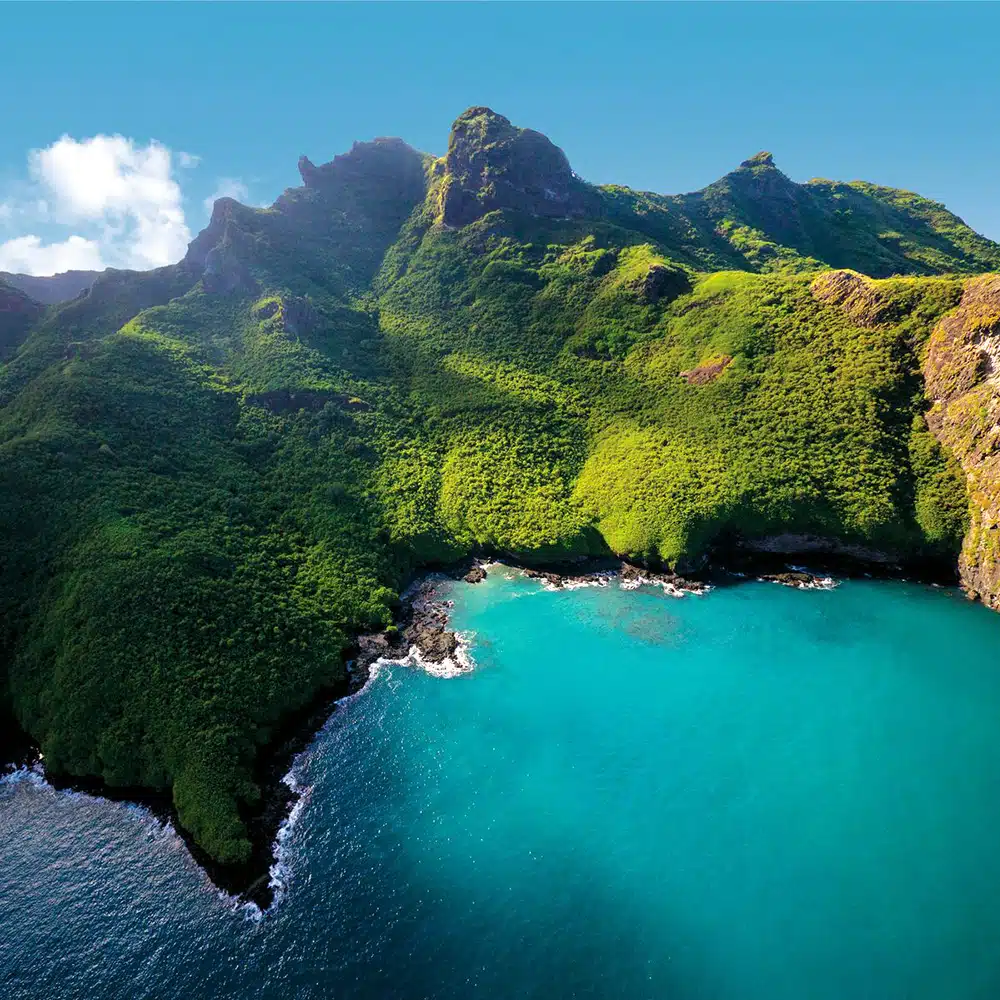
On the largest island in the Marquesas, start with a stroll around the village of Taiohae and a visit to its market before heading inland for a hike to Vaipo Waterfall. On the north-east coast, near the village of Hatiheu, don’t miss the archaeological site of Kamuihei, Aniata’s favourite place: “Now restored and carefully preserved, this sacred site is truly majestic. It is home to numerous petroglyphs and one of the oldest and largest banyan trees in French Polynesia, estimated to be around 800 years old.”

Hiva Oa: The Garden of the Marquesas
The village of Atuona, nestled at the end of a bay fringed with black sand, preserves the legacy of both Paul Gauguin and Jacques Brel. A visit to the Calvary Cemetery, where both artists are buried, and to the nearby cultural centre is a must.
“This is where you’ll find the largest concentration of ancient monumental tikis still standing in their original setting. Today, those that were neither destroyed by missionaries nor hidden by local people are displayed in museums around the world…” adds Aniata.
Ua Pou: A Spectacular Landscape
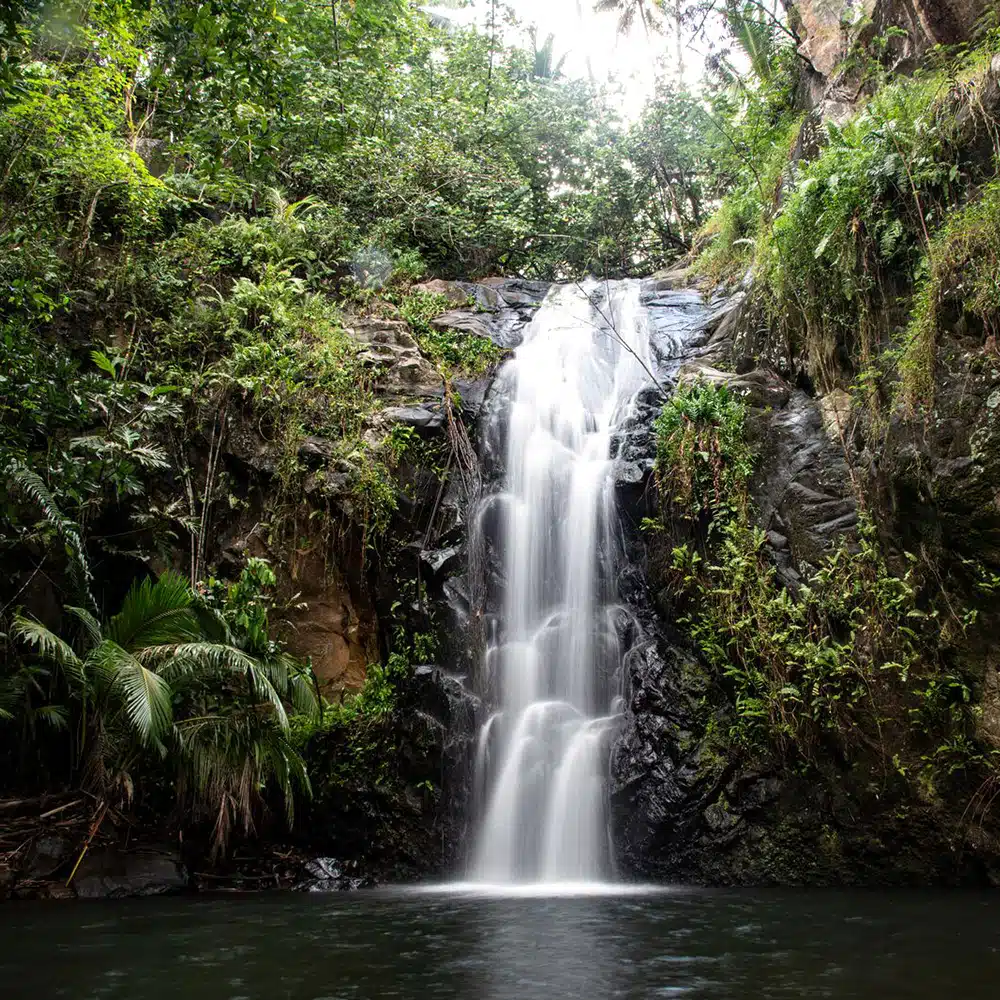
Dominated by its iconic basalt pinnacles, Ua Pou is the driest island in the archipelago. Its hiking trails are spectacular, particularly those leading to the Hoihoi Valley and the twin-peaked summit of Poumaka.
“Ua Pou’s distinctive peaks can be recognised from far away! Visitors also love its magnificent white-sand beaches, a rarity in an archipelago where black sand beaches are far more common,” Aniata explains.

Fatu Hiva: Far from Modern Life
Fatu Hiva’s natural scenery is breathtaking. In the village of Omoa, local people will show you how tapa is made from beaten bark.
“Whenever I’m here, these magnificent mountains fill me with an overwhelming sense of peace and tranquillity,” says Aniata. “And everyone agrees that the sunset over Hanavave Bay is the most beautiful in the Marquesas!”
Ua Huka: The Island of Horses and Birds
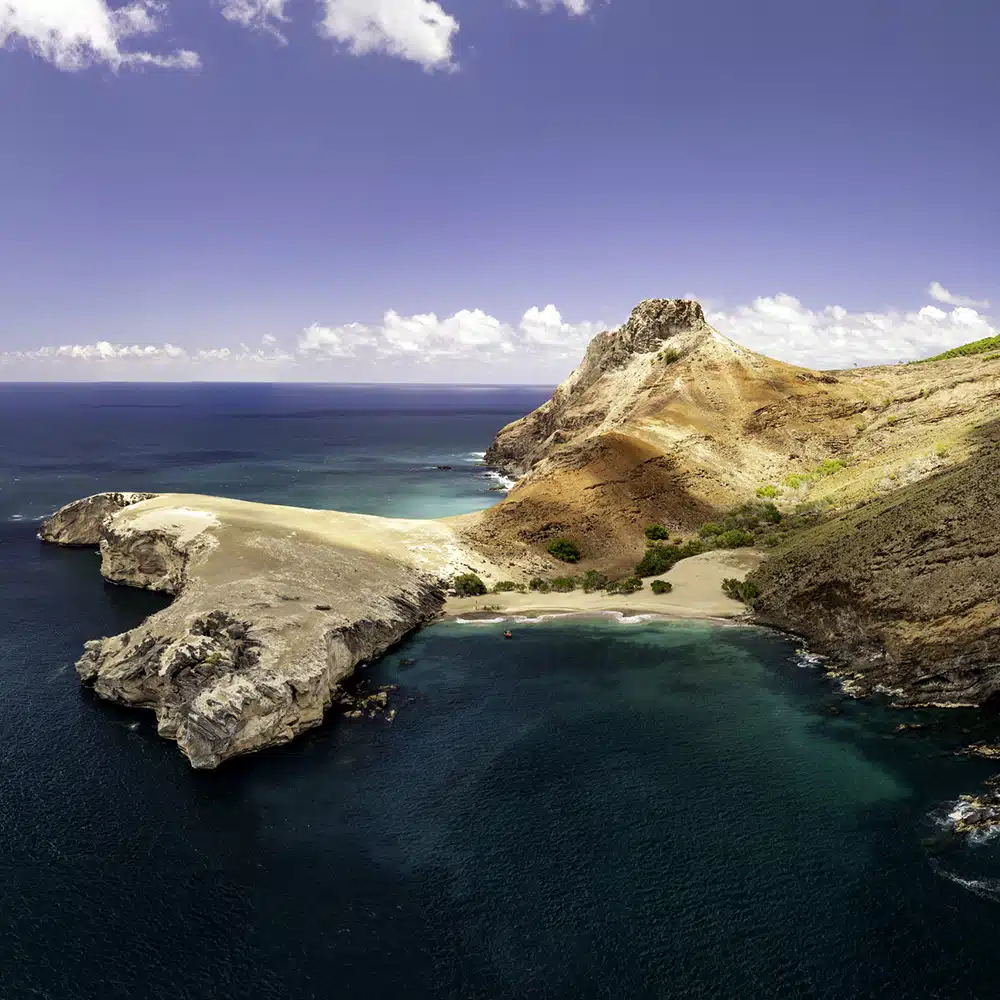
With its contrasting desert landscapes and lush vegetation, Ua Huka is home to a unique ecosystem, including several endemic bird species. Why not explore its striking red volcanic landscapes on horseback?
“Ua Huka certainly lives up to its nickname,” says Aniata. “You’ll encounter large herds of wild horses, and the island has just three villages.”
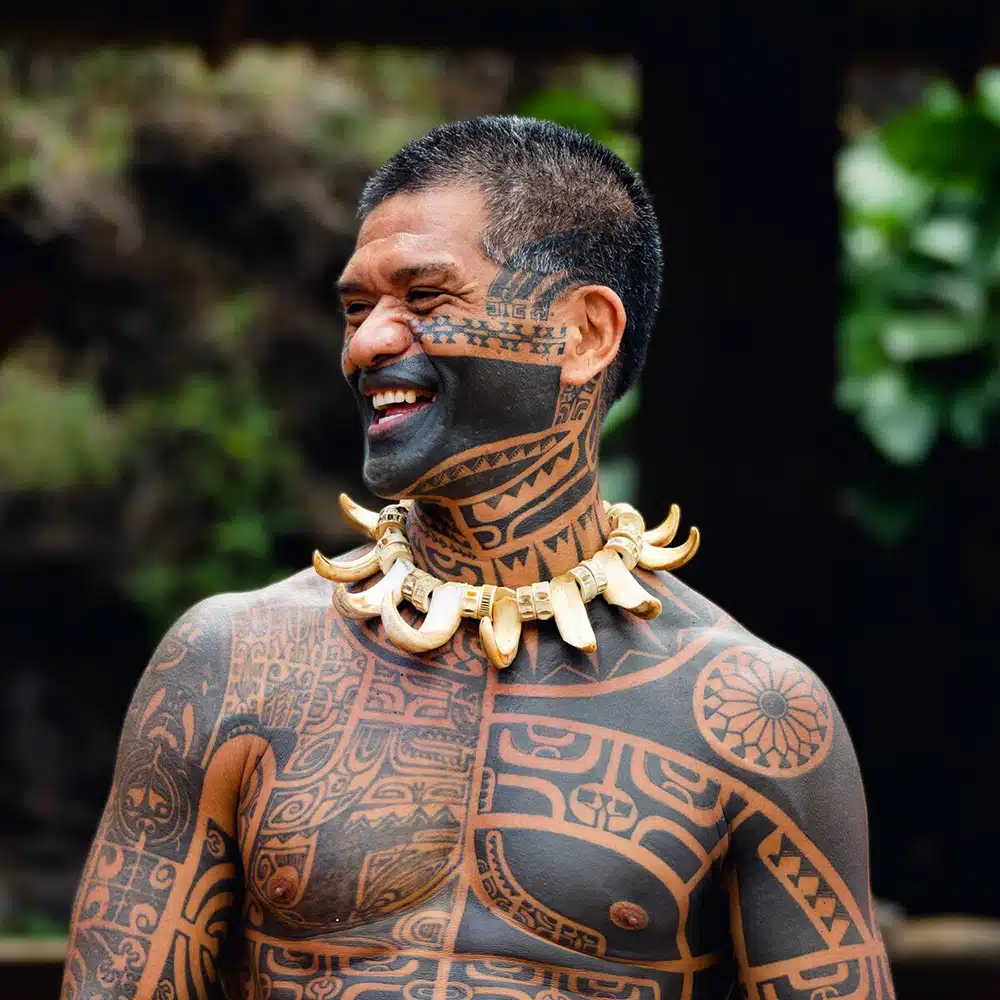
Tahuata: The Marquesas’ Best-Kept Secret
Lush and fertile, Tahuata is the least-visited island in the Marquesas and can only be reached by sea. A stop reserved for the fortunate few…
Aniata looks forward to every visit to Tahuata: “What I love most here is the people. They have such a joy for lifeand they radiate an extraordinary warmth. They’re also remarkable artists, creating magnificent objects carved from bone.”
When to Visit the Marquesas Islands: Planning Your Trip

Temperatures in the Marquesas Islands range from 22°C to 30°C throughout the year, with an average of around 28°C. The islands have a humid tropical climate, with the seasons defined by rainfall rather than temperature. Although the archipelago lies close to the Equator, it is outside the tropical cyclone belt. The so-called “cool”m September to December, is the most pleasant, with refreshing trade winds and less frequent rainfall.
If you’re travelling independently, it’s essential to book your inter-island flights or boat transfers well in advance. Airstrips can be found on every inhabited island except Fatu Hiva and Tahuata. Two ferry services connect the northern and southern island groups.
Finally, exploring the Marquesas with a local guide is a real plus. Their local knowledge insight into Marquesan culture, helping you look beyond the beauty of the landscapes.
Through the Eyes of Aniata Kimitete, a Marquesan Tour Guide
Aniata Kimitete
Born on Nuku Hiva, Aniata has spent almost her entire life on her beloved island, apart from a brief period away to pursue her studies. She has worked as a tour guide since 2013, notably aboard the Paul Gauguin, where she helps passengers discover and gain a deeper understanding of Polynesian culture. She is thus following in the footsteps of her parents, who played a major role in putting the Marquesas on the international map. Her father, Lucienmother, Debora, was president of the first tourism committee and an active advocate for environmental protection in the Marquesas.
1. What would you like to share with people discovering the Marquesas?
I always try to help visitors understand that our history didn’t begin with the arrival of the Europeans. We are the heirs to a civilisation that stretches back more than a thousand years, and we’re immensely proud of our culture and ions. Our archipelago is truly unlike any other in French Polynesia.
2. What makes it so special?
First of all, there’s the Marquesan language and our history, as these were the first islands in French Polynesia to be colonised by Europeans. Our craftsmanship is distinctive too: the motifs and decorative designs are different from those found on the other islands. Another example is the endemic plants we use, which give our monoi a very different fragrance from the one you’ll find in Tahiti. In fact, here we call it “pani”
But above all, what strikes visitors in the Marquesas is a powerful energy that can be felt everywhere. This mana leaves a lasting impression, turning visitors into our greatest ambassadors. They’re deeply touched by the warmth of their welcome and the kindness of the people. They often say to me, “You all seem so happy!”
3. Finally, one last question for food lovers: What should you try in the Marquesas Islands?
Seventy per cent of our food comes from the ocean, so seafood, crabs and spiny lobsters are a must. If you enjoy meat, don’t miss two traditional dishes that are often served at Sunday family gatherings: goat cooked in coconut milk and slow-cooked pork.
Photos crédits: ©F. Courrège ; ©Studio PONANT / L. Patricot / L. Payan / T. Garnier / J. Leclercq ; ©TMK ; © A. Kimetete

PONANT takes you there
Experience the thrill of exploration in the South Pacific’s most remote islands.