


 Explore to inspire, a PONANT podcast
 PONANT's cruises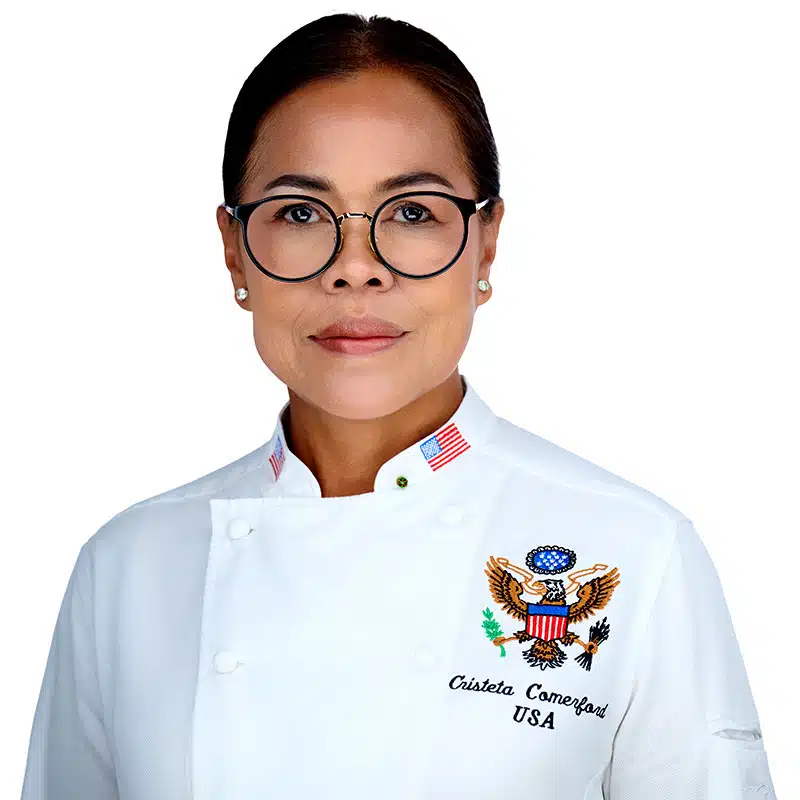
When gastronomy becomes a diplomatic art
Invited aboard Le Commandant Charcot for a cruise in the Gulf of Bothnia, Chef Cristeta Comerford, the first woman to head the White House kitchens, who served five Presidents, speaks to Escales about the art of dining as a tool for dialogue between nations.
How did you become executive chef of the White House?
In 1996, I was working in a Washington D.C. restaurant when I was asked to lend a hand during a State Dinner held in honour of Nelson Mandela. A few months later, executive chef Walter Scheib offered me a position in the presidential brigade. After a lengthy security check, I entered the White House as a sous-chef. In 2005, out of more than 450 candidates, I was chosen by President George W. Bush and First Lady Laura Bush.

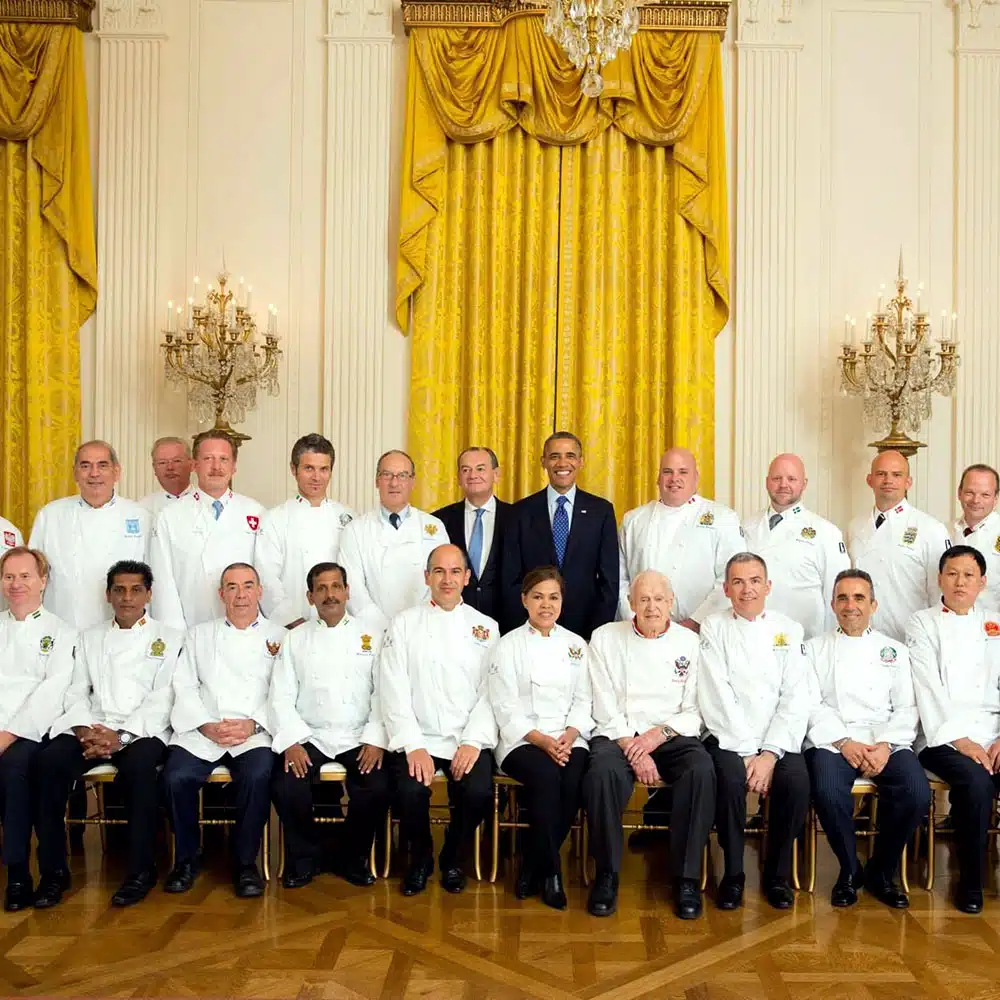
Annual Club Des Chefs Des Chefs Meeting hosted by President Barrack Obama, organized by Founder Gilles Bragard, August 23, 2013.
How do you balance culinary creativity with diplomatic protocol?
At the White House, every meal reflects the President and the First Lady. A chef always puts a little bit of their personality into it, but the primary objective remains to satisfy those for whom they are cooking. We must also think of guests arriving from across the world: heads of state, monarchs, chancellors… Culinary diplomacy means presenting American gastronomy while honouring the traditions of others.
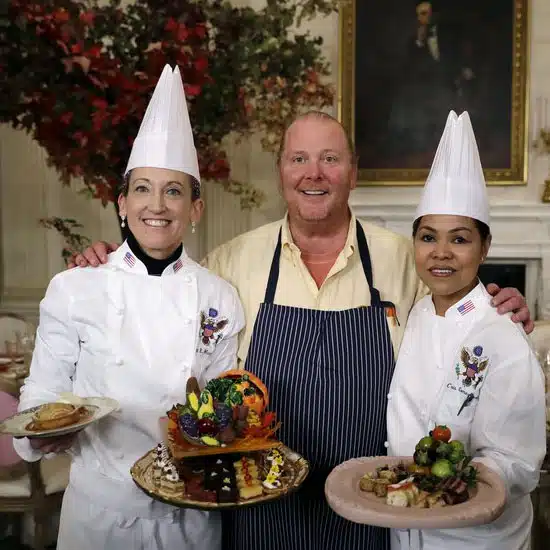
White House Executive Chef Cristeta Comerford (right), Executive Pastry Chef Susan Morrison (left), Chef Mario Batali (centre). State Dinner Preview in Honor of the Prime Minister of Italy Matteo Renzi, October 18, 2016.
Where does your passion for cooking come from, and how does it continue to guide you?
It’s not a job, it’s a vocation. I was fortunate to meet chefs very early on who believed in me. In Chicago, the first one — who was also president of the American Federation of Chefs — impressed me from the moment I saw him in his huge toque. I was 24 years old. I entered the pantry and worked my way up. These mentors shaped my way of working and taught me to appreciate everything about this profession, from the simplest tasks to the most elaborate dishes. Peeling garlic, assembling a pâté en croûte, preparing a dessert… In our profession, you have to know how to do everything, and above all, love doing everything. It is this passion, born at the beginning and nurtured by those who guided me, that continues to carry me today.
You sometimes describe state dinners as a “pause”. What role do they play in the diplomatic process?
I really like this concept, because it perfectly captures the idea of a special moment. But a State Dinner is never a simple interlude: it is the culmination of a whole process that extends well beyond the evening itself. Before the dinner there have been weeks of bilateral discussions, preparatory meetings, sometimes discreet negotiations. The meal is the crowning touch to it all. It symbolises advances between nations, celebrates what has been accomplished and opens the way for what is yet to come.

Heirloom Tomato Salad, Basil Oil, White Balsamico and Lemon Granite awaits the service staff for a Private White House Dinner, August 3,2020.
Of your years at the White House, which memory stands out most vividly?
The state dinner given for Queen Elizabeth II, in May 2007, made a big impression on me. I was still new to my role as executive chef, and everything had to be timed to the second. What made this dinner unusual was that it was the first time we kept pace with another head of state. Usually, everything is dictated by the rhythm of the President: when he finishes his meal, we serve dessert. But that evening, we followed the Queen’s tempo — something unprecedented. And at the end of the meal, according to British tradition, the entire staff — chefs, butlers, maîtres d’hôtel — lined up at the exit of the dining room to bid her farewell.
Photo credits: ©Cristeta Comerford; ©Club Des Chefs Des Chefs

Savour the world with PONANT