

 Explore to inspire, a PONANT podcast
 PONANT's cruises
Two archipelagos ripe for exploring
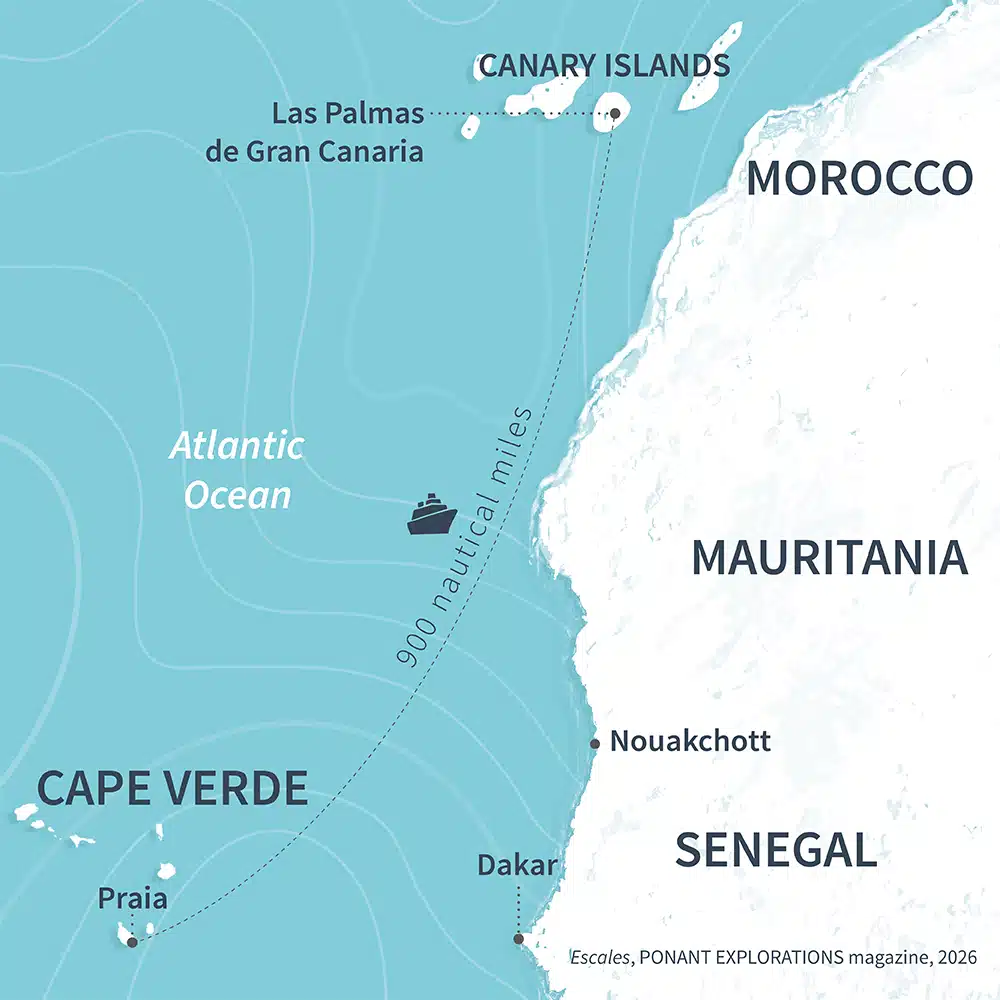
Is your idea of paradise walking through desert landscapes or watching baby tortoises hatch on endless untamed beaches? The Canaries and Cape Verde share a volcanic natural heritage, but they offer radically different experiences to explore. Below, we take a look at a few of their distinguishing features to help you choose between these two gems in the Atlantic Ocean.
The Canary Islands: an archipelago living an eternal springtime
With its year-round springtime temperatures and low levels of rainfall, the Canary Islands are well worth exploring at a gentle pace. Volcanos, caldeiras and coastlines are all there waiting to be discovered, without any danger of blistering heatwaves or winter chills.
The Canary Islands in numbers
- Area: 7,447 km²
- Number of islands: 8
- Languages spoken: Spanish (Castilian) and Canary Island variants
- Climate: subtropical oceanic
- Temperatures: from 18°C (winter) to 26°C (summer) on the coast
- Status: An independent region of Spain
- Population: around 2.2 to 2.3 million
- 4 UNESCO sites (World Heritage): Teide National Park; Garajonay National Park; San Cristóbal de La Laguna; Risco Caído and the sacred mountains of Gran Canaria
- 4 national parks: Teide, Garajonay, Caldera de Taburiente, Timanfaya
Cape Verde: a cultural melting pot
While the Canary Islands are scattered along the Moroccan coastline and retain a strong Spanish influence, the independent archipelago of Cape Verde is on the same latitude as Dakar and has inherited a colourful blend of cultures and customs from its African and Portuguese inhabitants.
Cape Verde in numbers
- Area: 4,033 km²
- Number of islands: 10 (9 of them inhabited)
- Languages spoken: Portuguese (official), Cape Verdean creole
- Climate: dry to semi-arid tropical
- Temperatures: 22°C to 30°C year round
- Status: An independent republic since 1975
- Population: around 520,000
- UNESCO sites (World Heritage): Cidade Velha
- 30 protected landscapes: the national parks of Monte Gordo, Fogo, Moroços and more
Photo credits: StudioPONANT/Elvia Giannitelli; Yanis Lasbats; ©Studio PONANT/Lorraine Turci; iStock

Let PONANT take you there
Set sail for unspoilt archipelagos along the African coast