


 Explore to inspire, a PONANT podcast
 PONANT's cruises
Discover exceptional biodiversity
A small country in Central America with a tropical paradise feel, Costa Rica is a remarkable place for wildlife lovers to explore. Discover the multi-faceted astonishing biodiversity thanks to the advice of Katia Silva, PONANT EXPLORATIONS naturalist guide.
Costa Rica’s emblematic animals
During your trip to Costa Rica you will surely have the chance to observe some of the most common species on its territory, such as:
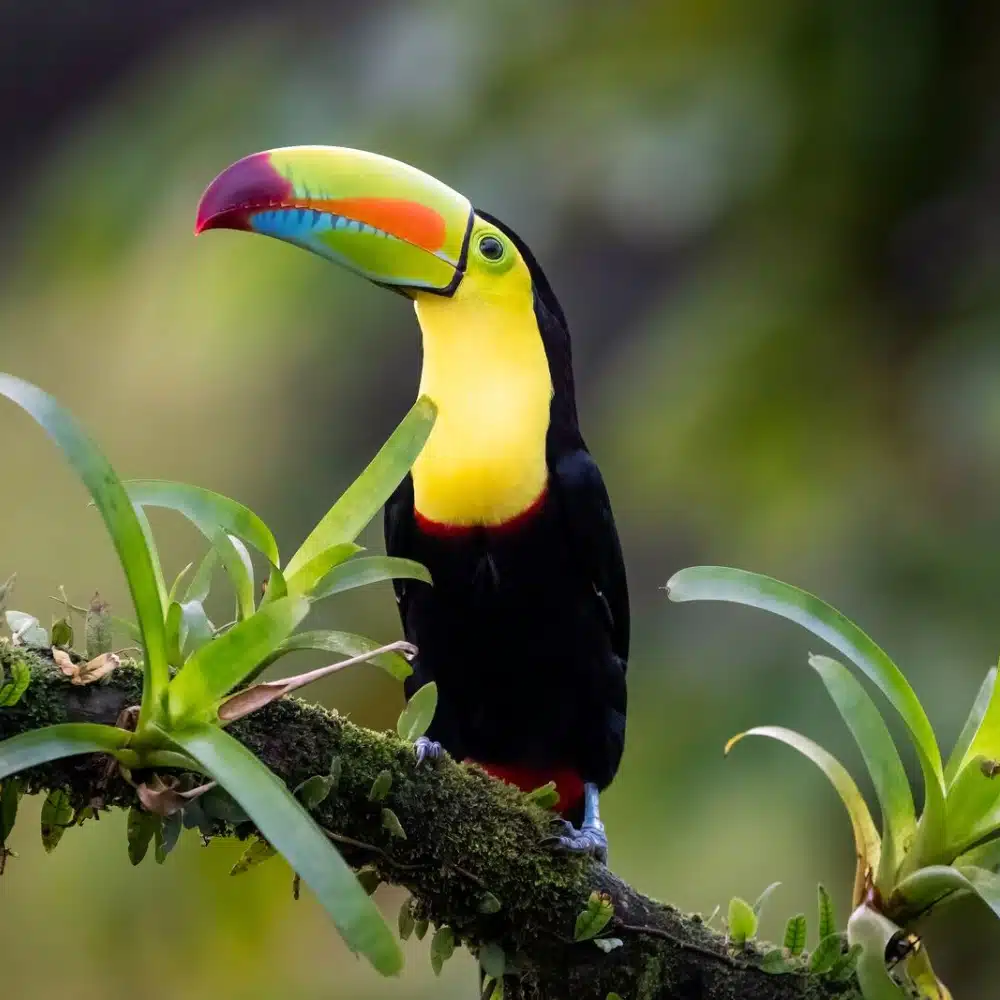
The toucan, black and colourful
With its huge beak and dazzling colours, the toucan seems to be watching over the jungle. Costa Rica is home to six species, the most beautiful of which are undoubtedly the keel-billed toucan and its astonishing polychrome beak, or the yellow-throated toucan and its elegant yellow and black hues. You’ll recognise them from afar by their highly choreographed flight: a few quick fluttering of wings followed by a long glide.
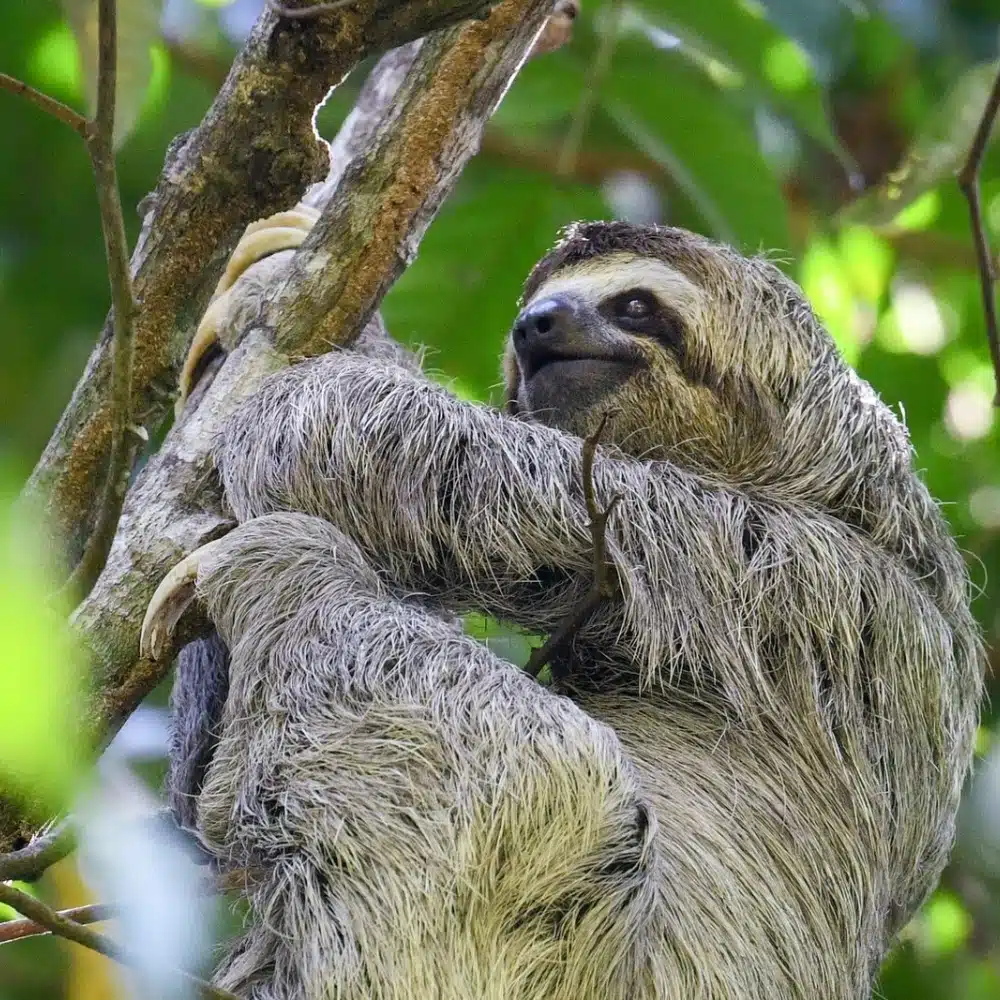
The sloth, an unexpected grace
Hanging from the branches of tropical trees, the sloth can spend several hours perfectly still. If it moves at all, it does so slowly, which can be explained by its diet consisting exclusively of low-calorie leaves. Perhaps you’ll have the chance to admire it as it makes its weekly descent from its tree?
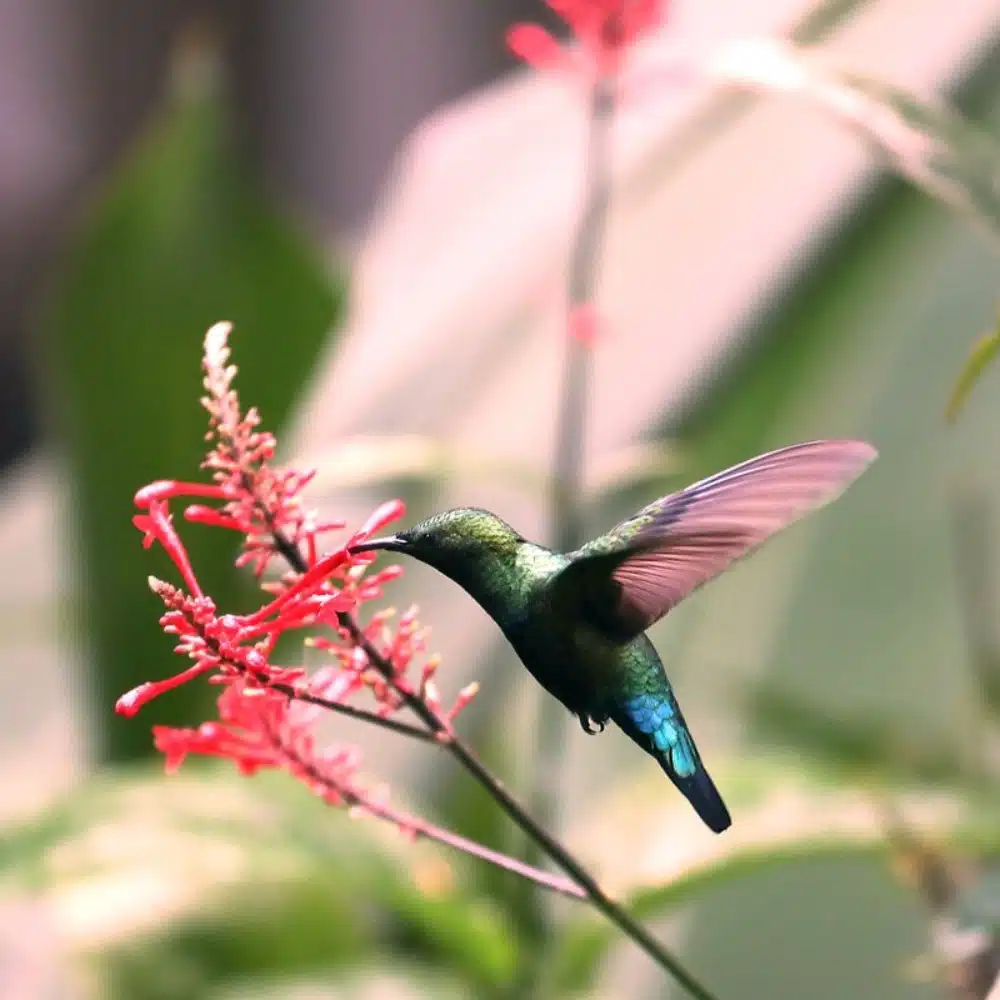
The hummingbird, the beating heart of the forest
Tiny birds with iridescent reflections, hummingbirds whirl from one flower to the next with fascinating speed. The country’s 53 species are spread throughout the country, making them likely to be encountered regardless of the time of year. Be discreet, they can flee at more than 50 km/h if you scare them.

The iguana, the poetic reptile
A lover of sun and humidity, the iguana is found in large numbers along Costa Rica’s two coastlines. It is no less difficult to observe… that is because of the art of camouflage. With a little patience (and a good pair of binoculars), you’ll be able to spot it, particularly in the lush mangroves that line the country’s beaches.
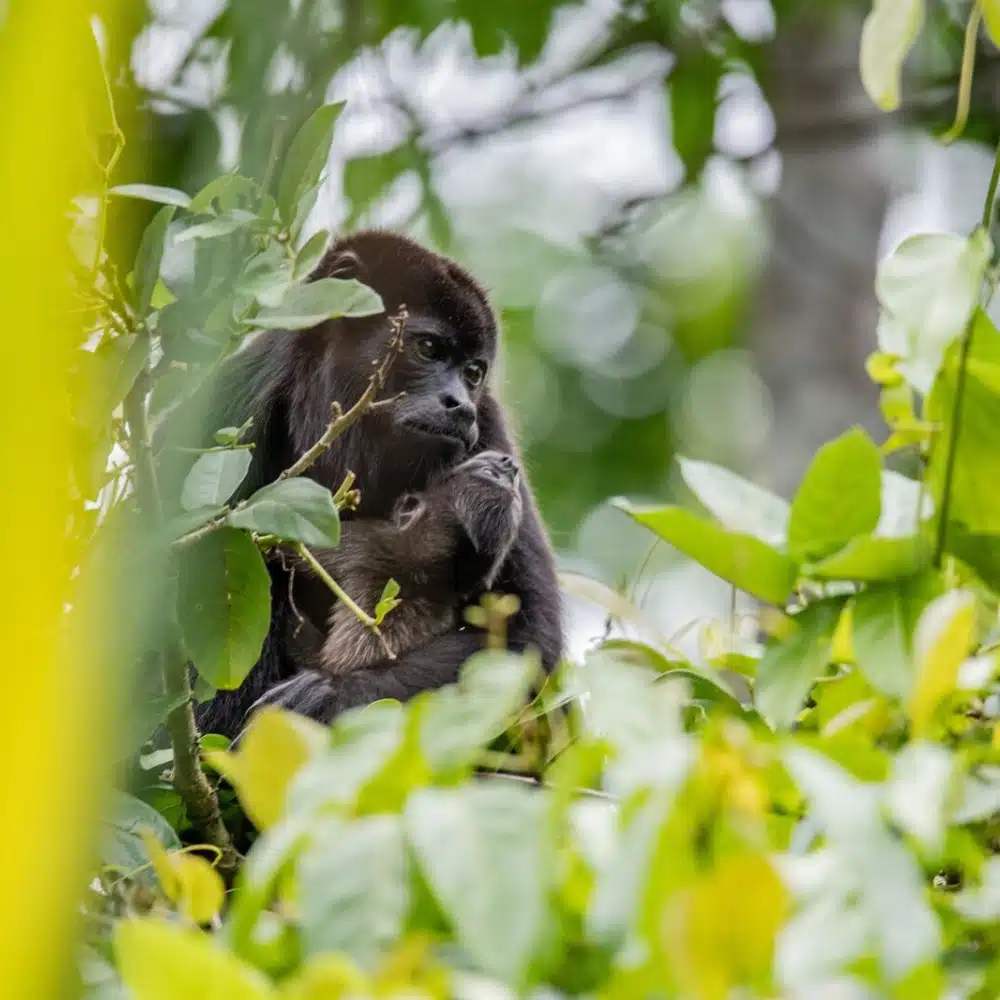
The howler monkey, a tropical cacophony
50 to 70 centimetres tall, the howler monkey is less impressive for its size than for its cry, a call that can be heard several kilometres away and is used to mark its territory. It is particularly active in the morning and evening, while it rests throughout the day.
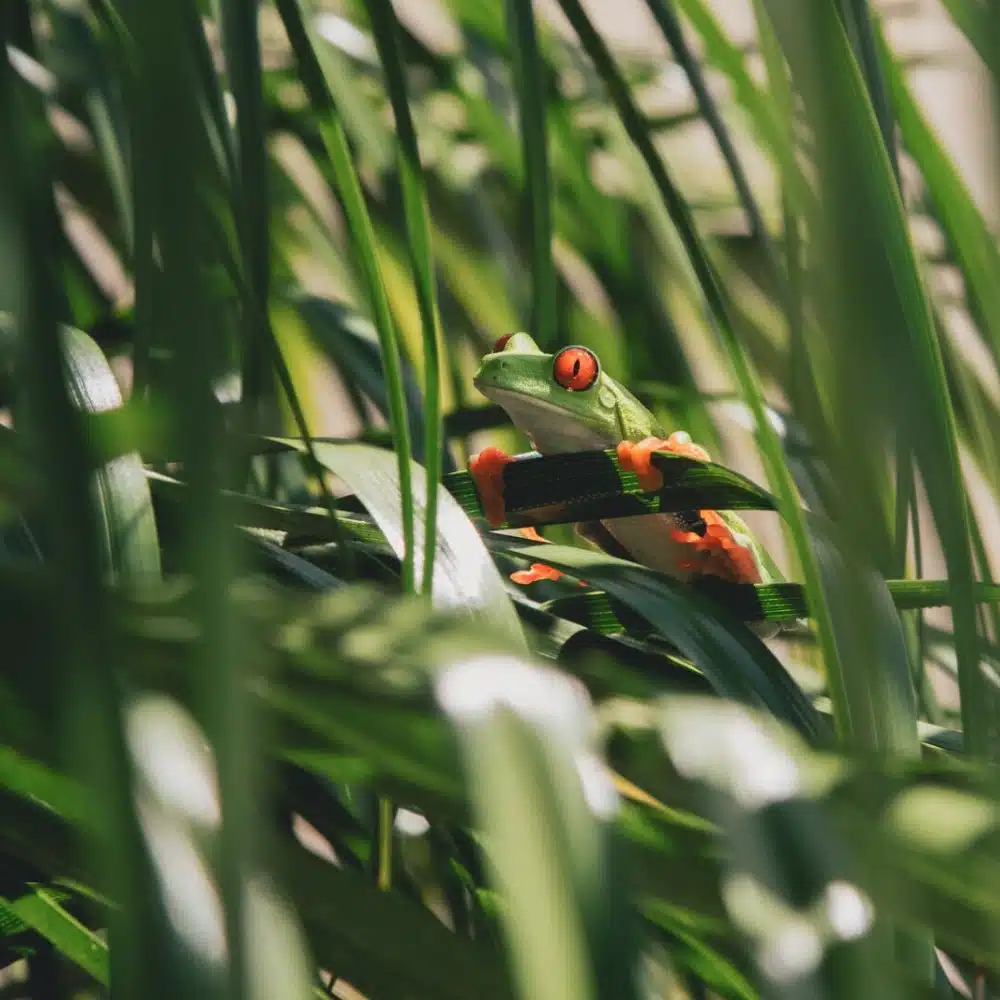
Frogs, night-time icons
Recognisable by their bright red eyes, green body and blue flanks striped with yellow, the red-eyed tree frog is Costa Rica’s most emblematic frog. You’ll come across one of them in the country’s tropical rainforests… usually during the dark hours when insects are best hunted.
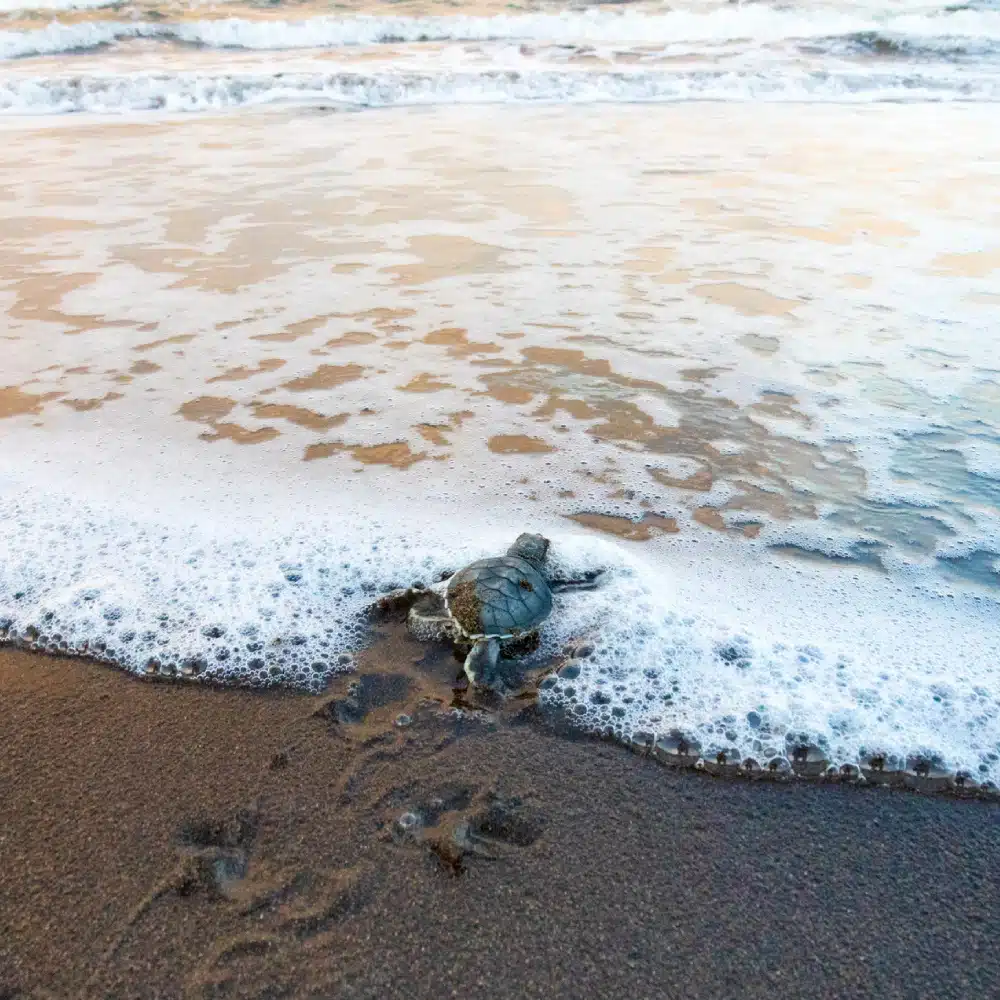
Sea turtles, souls of the ocean
Found on the coasts of the Pacific and the Caribbean, sea turtles are particularly visible during the egg-laying season, from June to November, when the females come to lay their eggs on protected beaches. After hatching, the young migrate together to the ocean, a short but dangerous journey. The national parks, especially Tortuguero park, offer the best conditions for admiring this show while fully respecting the wildlife.
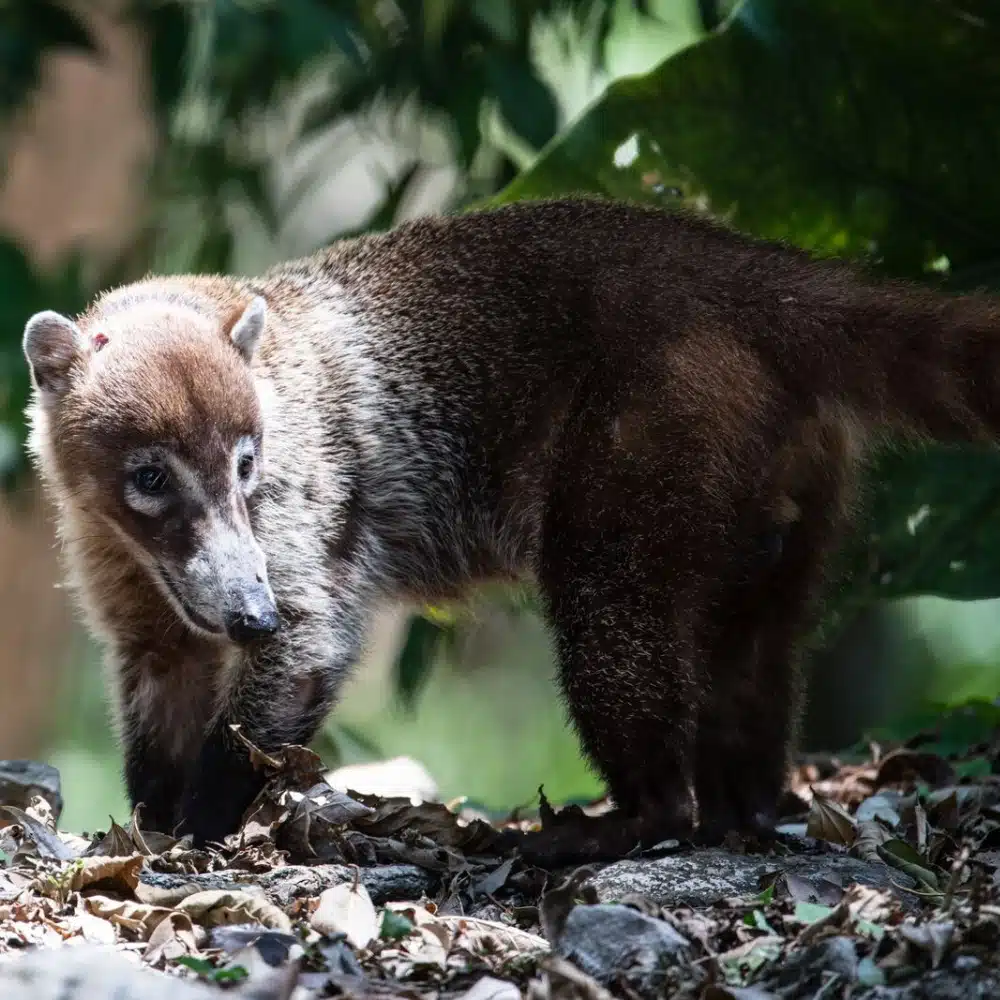
Coatis, jungle explorers
Small mammals with long snouts that look as much like monkeys as raccoons, coatis are ubiquitous in Costa Rica. While males often live alone, females and their young gather in relatively noisy packs… Whether you’re walking through a forest or lying on a golden beach, be on the lookout for the little barks that might betray their presence.
A unique and particularly well-preserved wildlife

At the junction between the north and the south of the American continent, Costa Rica is a biological bridge where species from both hemispheres meet. Its tropical forests provide excellent habitats for many species of primates and birds, especially the primal forests which make up 7.5% of the total surface area and are particularly a good environment for biodiversity. On the seaside, its two coastlines offer highly contrasting marine worlds, from coral reefs in the Caribbean to whale migration corridors in the Pacific.
According to Costa Rica’s Ministry of the Environment, the country is home to 5% to 6% of the world’s biodiversity, despite covering only 0.03% of its surface area. The Organisation for Economic Co-operation and Development (OECD) lists 120,000 species, including around 7,000 species of marine animals; but scientists believe that the exact number could be as high as 500,000 if as yet unknown or rarely observed species are taken into account, particularly insects. Around 25% of the country is protected thanks to the creation of national parks, a proportion that is expected to reach 30% by 2030, making it one of the world leaders in conservation.
Through the eyes of
Katia Silva, PONANT EXPLORATIONS naturalist guide
Brazilian-born marine biologist Katia Silva specialises in the conservation of marine mammals and wildlife in Latin America. Her passion for animals has led her to take part in programmes aimed at rescuing endangered specimens and initiatives to protect biodiversity.
1. What species can easily be spotted when travelling in Costa Rica?
Monkeys, sloths and iguanas are relatively easy to spot throughout the country, as are numerous birds, such as toucans and parrots. On the other hand, large predators, such as the jaguar, are much harder to spot, as they’d rather stay in isolated areas: to observe them, you usually need an experienced guide, especially during night-time outings in the forest. Similarly, many reptiles and amphibians are mainly visible at night, such as the red-eyed tree frog.
2. Any advice on how to maximise your chances of seeing animals?
Get up early! The early hours are the best for observing animals, before the heat forces them to retreat to less accessible places. You also need to be patient and be silent. It’s often when everything’s quiet that the most interesting observations can be made. The idea is not just to come across this or that specimen, but also to reconnect with the natural environment.
3. What experiences would you recommend to discover marine wildlife?
Boat trips and cruises in Costa Rica offer the best opportunities to watch whales and dolphins. Snorkelling and diving can also lead to some wonderful encounters, particularly on the Caribbean coast, where the coral reefs are home to numerous species of tropical fish.
On land, the best observation site is undoubtedly the Marino Ballena National Park, where you are likely to spot humpback whales and dolphins from the beach.
4. When is the best time of year to spot humpback whales?
They can be seen almost all year round on the Pacific coast, thanks to the crossing of migrations from both hemispheres. Whales from the north can be seen between December and March, and those from the south between July and October. Both cohorts take advantage of the warm waters off the Costa Rican coast to reproduce, before returning to the nutrient-rich areas in the Arctic or Antarctic.
5. What are the rules for preserving these fragile ecosystems?
It is essential to keep a safe distance from the animals, avoid feeding them, stay on the paths, and follow national park regulations. Ideally, you should choose a responsible guide or operator who will naturally ensure that these behaviours are complied with.
Photo credits: PONANT/Julien Fabro; StudioPONANT Joanna Marchi; Morgane Monneret; Margot Sib; Clement Louineau; Olivier Blaud; Adobestock / 2021 andreanita; iStock

PONANT takes you there
Set sail for lush shores