

 Explore to inspire, a PONANT podcast
 PONANT's cruises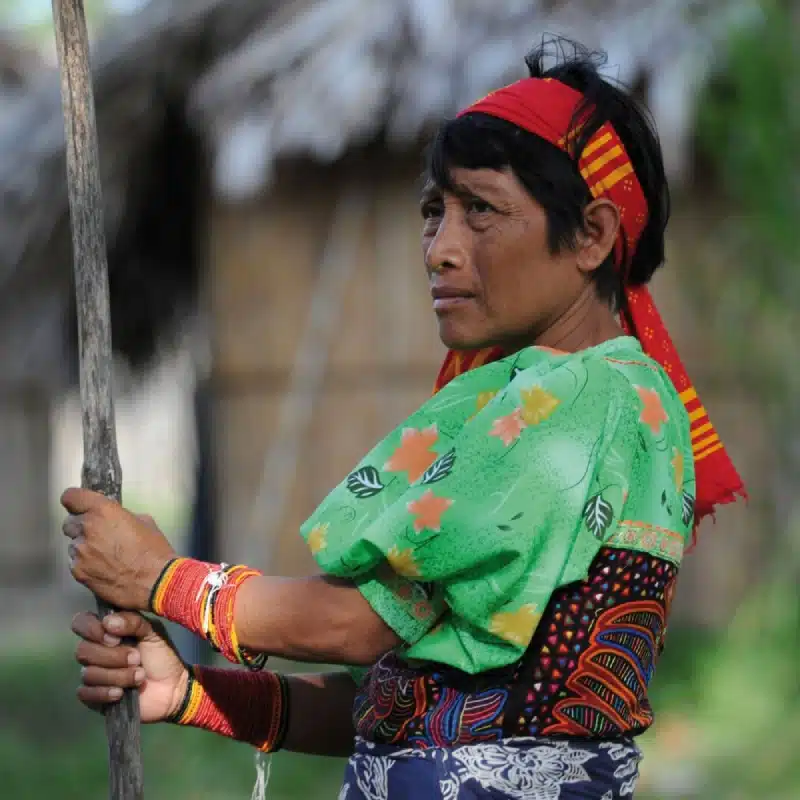
The soul of a culture shaped by water
When you live in the shelter of a long coral barrier reef, time melts into thin air. The San Blas Islands’ archipelago, dotted along the Panamanian coastline, extends out into the Caribbean Sea. It is here, on white sandy shores bathed in crystalline waters, that the Guna live. Immerse yourself in a place where the art of the good life is intertwined with the art of “mola”, a unique creative form reflecting the soul of a sovereign people.
A coral-ringed sanctuary in the Caribbean Sea
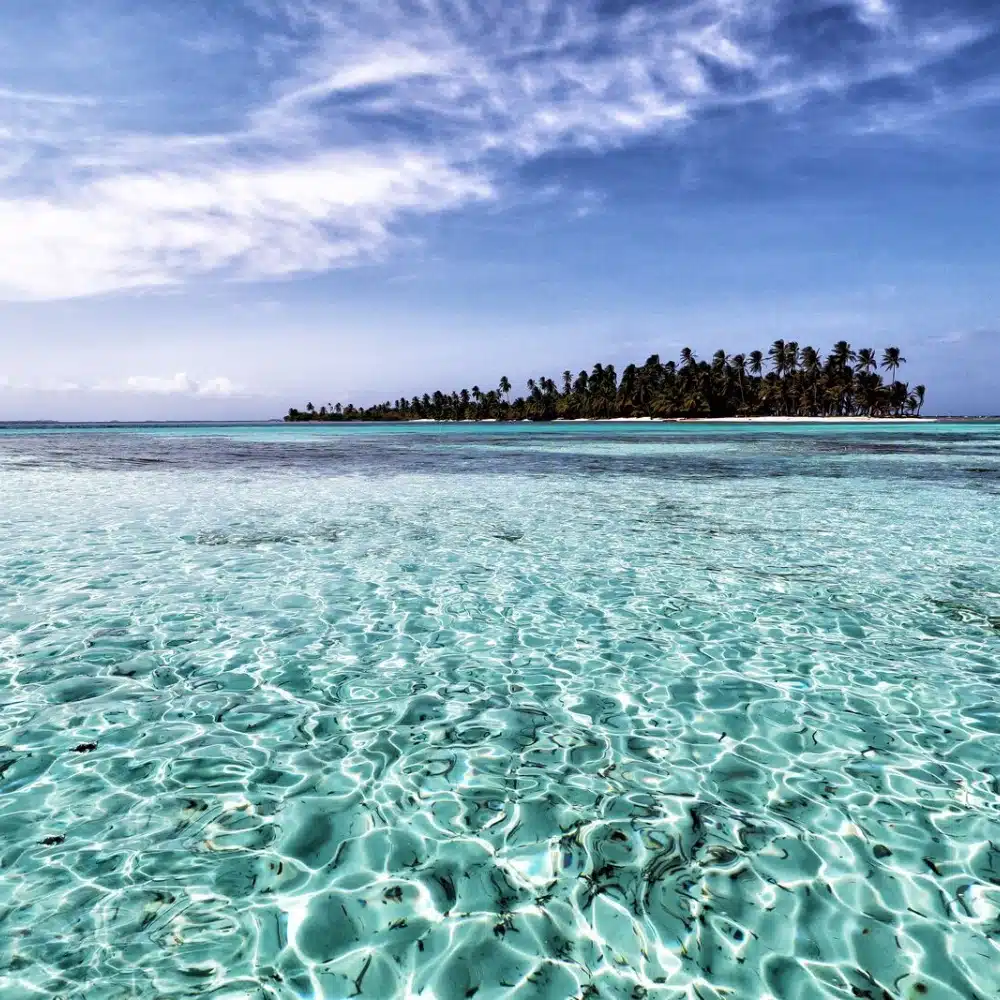
As you sail towards the Panamanian coast, a maze of islands surges out of the water, looking every inch the furthest reaches of the planet. The San Blas Islands were not birthed by the Earth’s volcanic eruptions but out of a slow-burning underwater alchemy. The network of nearly 400 tiny islands, formed purely out of coral, extend for over 300 kilometres. In this fragile paradise, immaculate atolls barely trouble the water’s surface.
This is exploration in its truest sense. You start to move at a slower pace, cradled by gentle trade winds. Your gaze lingers on crystalline lagoons, long stretches of white sand and dense coconut groves. According to Panama’s tourist bureau, just 49 of the islands are inhabited. They have been a refuge to more than 60,000 members of the Guna community since the 16th century. These people have, however, lived on the Isthmus of Panama since pre-Colombian times.
What’s in a name? Kuna or Guna?
The San Blas Islands’ people were long referred to as the “Kuna”, but their native alphabet doesn’t actually include the letter K. They changed their name to the Guna in the early 2010s out of a desire to embrace their identity. They are now known as the Guna by the Panamanian state and run the “comarca Guna Yala”, or “land of the Guna”, which is the archipelago’s real indigenous name. As the French journal the Cahiers d’Anthropologie Sociale confirms, they are the only Panamanians to have this autonomous legal status, and as such they have the jurisdiction to protect their lands and customs.
The secret life of a community of women

Once you are on dry land, the sober design of the traditional houses contrasts with Guna women’s incredible flamboyance. Their gold rings, geometric beads, bright scarves and dazzling blouses light up the sandy streets. As you wander past ramshackle homes, you breathe in a tranquil ambiance centred around a large community hut. This solemn space is for decision-making and ritual chant.
While the men are out fishing in their pirogues, the women manage the village. They are the pillars of this matrilineal society and the guardians of its land and heritage. This way of life has long been studied by the anthropologist Michel Perrin who, in a 2001 conversation with Radio France, described it as having “a strict etiquette, organised around sages’ chanting and women’s manual labour”.
Michel Perrin: an ethnologist opening up worlds
As a research director at the National Centre for Scientific Research (CNRS) and a specialist in Guna society, the French anthropologist Michel Perrin has devoted much of his life to decoding mola art. He wrote a book entitled Tableaux Kuna (or “Guna Art”) and was one of the first researchers to see the textile creations as more than just an exotic folkloric artefact. In his foundational work, he uncovered a major pictorial art made up of metamorphoses and double meanings, and emphasised that behind each piece of cloth lies the collective unconscious and powerful founding myths of an entire people.
Mola art: resistance woven into cloth

This fascinating matriarchal society finds its fullest expression through needlework. Mola-making takes on a life of its own in Guna women’s expert hands to form vibrantly coloured panels, and it is only the women who know the secret. In the shade of the palm trees, their little scissors dart across the fabric with disconcerting agility. Their skills are minutely detailed, their patience endless.
But the textile is far more than just ornamentation. Behind the dazzling colours, an act of visceral resistance is being sewn into the warp and weft. Molas serve as a rampart against assimilation and the erasure of Guna culture. “I call it an art of reaction,” says Michel Perrin. “It’s in reaction to Western constrictions that mola has become the key symbol of Guna identity.” As the standard bearer for an identity, it is fiercely protected.
The secrets of mola, from bare skin to textiles
In the 17th century, Guna women traced geometric patterns onto their bare skin using plant-based dyes. When they were forced to dress by missionaries, they decided to transpose their art onto fabric. This act of resistance only grew in importance in 1925 when the Panamanian government tried to ban this traditional form of dress. To enable their art to live on, the craftswomen adopted the technique of reverse appliqué. They layered several vibrant fabrics on top of one another, cutting holes in the uppermost layers to reveal the colours below, then sewing the edges with minuscule stitches. In doing so, they created genuine textile sculptures.
An immersive insight into the Guna imagination

Sit yourself beside the craftswomen to watch them make their creations up close. Mola gives you a rare insight into the local way of thinking, which includes a remarkable artistic language. You will see a richly populated menagerie of wildlife and plants living alongside people’s everyday life. This is art which doesn’t aim to reproduce reality “but to signify it”, says Michel Perrin. Add to this a labyrinthine aesthetic of sinuous motifs inspired by coral, designed to ward off evil spirits.
Within this pictorial art form there also hide deep taboos, such as the serpent, a creature that the women refuse to depict. “There’s a very strong association between the needle used to sew and the animal’s teeth,” explains Michel Perrin. This is about more than just the motifs, however: the very act of sewing is charged with formidable magical power. The Guna’s spirituality is woven into the cloth, with each layer an echo of the strata of their mythological universe.
Photos credits: ©Studio PONANT/Nathalie Michel/Margot Sib/Margaux Coupez/Thibault Garnier

Let PONANT take you there
Voyage to meet ancient cultures