

 Explore to inspire, a PONANT podcast
 PONANT's cruises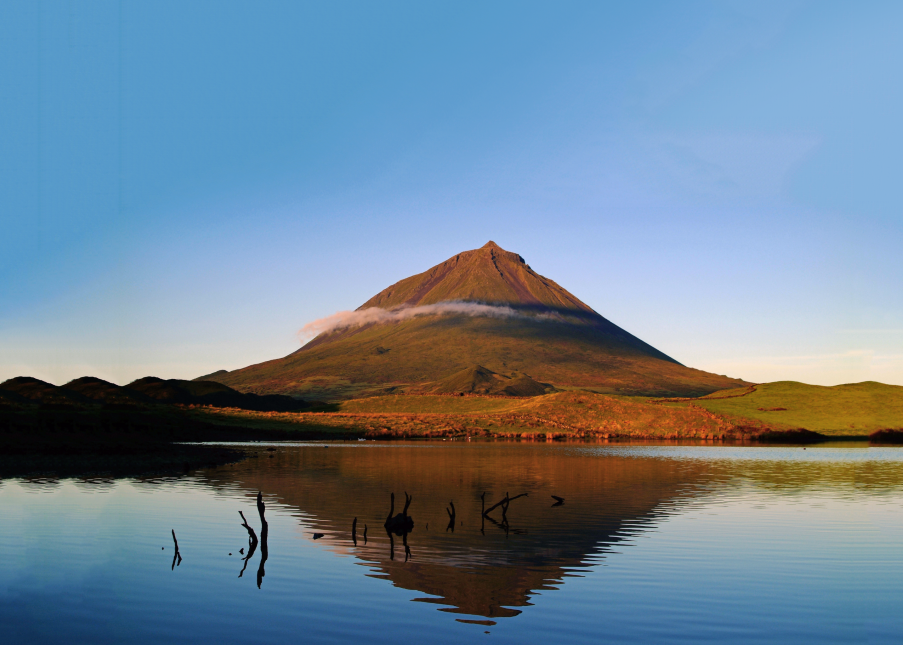

What is the sound of the Azores? The ever-present song of birds. By the sea, in the forest, in the heart of the vineyards.
Sylviane de Tracy
São Miguel, the lush mother island

The gateway to the archipelago, São Miguel unfolds like a magnificent fresco. Its volcanic landscapes, where the crater lakes of Sete Cidades lie alongside the fumaroles and hot springs of Furnas, are a testament to its original power. But its gentleness will surprise you just as much. Imagine tea plantations, the only ones in Europe, rolling across the hills, or amazing pineapple crops ripening slowly in greenhouses.
Santa Maria, the memory of the land

Back to the origins, further south, to Santa Maria. The firstborn of the ocean, it is the oldest of the Azores and the only island where you will find golden sandy beaches, offering a striking contrast to the dark rock of its neighbours. Lower in elevation and eroded over time, it reveals geological treasures: be sure to explore Barreiro da Faneca, a surprising little desert of red earth, and the impressive basalt columns plunging into the ocean.
The heart of the Azores still beats to the rhythm of fishing and farming. Tourism only comes third.
Sylviane de Tracy
Terceira, the historic and colourful heart of the island

There’s a change of atmosphere in Terceira, renowned for its joie de vivre and its festas, which combine religious fervour and popular jubilation in summer. Its jewel? Angra do Heroísmo, whose historic heart of the island with its colourful facades and elaborate balconies is listed as a UNESCO World Heritage Site. But the island’s uniqueness is revealed along its roads: in Terceira, you won’t see stone walls marking the boundaries of pastures, but endless hedges of hydrangeas. A spectacle of rare poetry in summer, in dialogue with that of the Imperios, these chapels that bear witness to popular devotion with their bright blue, green or orange walls. They are at the heart of a unique tradition: “a blend of medieval Christianity and sharing rituals”, explains Sylviane de Tracy.
Graciosa, the charm of discretion

Further north, Graciosa, nicknamed “white island” due to the colour of its volcanic rock and whitewashed houses, reveals a landscape of rare serenity, dotted with red-roofed windmills, a legacy of the Flemish presence. With no rivers or waterfalls, Graciosa required its inhabitants to perform a miracle of ingenuity: the construction of a fascinating network of cisterns, a unique heritage designed to collect precious rainwater. In the caldera, a visit to the Furna do Enxofre lava cave offers a descent into the heart of the crater, beneath an imposing vault of volcanic rock.
A sanctuary for cetaceans
Whale watching is a must in the Azores. The archipelago “lies at the junction of several currents and on the migratory route of cetaceans, where the warm Gulf Stream meets the cold waters from the north”, explains Sylviane de Tracy. This encourages the development of abundant marine life, making these waters one of the largest protected marine sanctuaries in the world, home to more than twenty different species, including whales, dolphins and sperm whales.
São Jorge, the dizzying fajãs

São Jorge is a vertical experience. Its spectacular landscape, with a huge ridge of cliffs plunging into the Atlantic, it is a delight for hikers. At the foot of these “walls” lie the fajãs, incredible strips of fertile land reclaimed from the ocean. You can explore them along spectacular coastal paths, winding between isolated villages where life, even today, continues to be almost entirely self-sufficient.
Pico, the majesty of the black giant

Opposite São Jorge stands the silhouette of the Ponta do Pico volcano, dominating the island and its ports of Madalena and Lajes. Here, land is not given, it must be conquered. On barren lava fields, the first settlers undertook a Herculean task: clearing away the rock to reach a little soil, then using those same stones to cover the landscape with a grid of thousands of black walls. Walking through the heart of this vineyard, in a mineral silence where each vine is protected from the sea spray by its volcanic enclosure, immerses you a little deeper into the soul of Pico with every step you take.
Faial, the legendary stopover for sailors

Nearby, Faial offers a surprisingly cosmopolitan atmosphere. Its secret? The port of Horta, a legendary gathering place for all Atlantic sailors. You can experience this unique atmosphere at Peter Café Sport, a historic bar that houses a collection of Scrimshaw, the art of painting on whale or sperm whale teeth. “In the days of whaling, the only thing that had no value were the teeth. The café owner accepted them as gifts or as currency.”
Flores, Corvo: the promise of the far west
The ultimate sentinels of Europe, these two islands are classified as a UNESCO Biosphere Reserve and live in harmony, away from the archipelago’s busiest roads. Flores, a veritable Garden of Eden set on the ocean, displays its lush vegetation between towering cliffs, spectacular waterfalls and crater lakes. Its neighbour, Corvo, offers a world of its own, dominated by the immense and solitary Caldeirão crater, a natural amphitheatre of striking beauty.
Photo credits: Sylviane de Tracy; iStock

Let PONANT take you there
Set sail for the Azores